Ice and Snow: Four Stories
notes on ancient ice cORES, TRAVELS TO INUVIK, sled dogs, and climbing frozen waterfalls
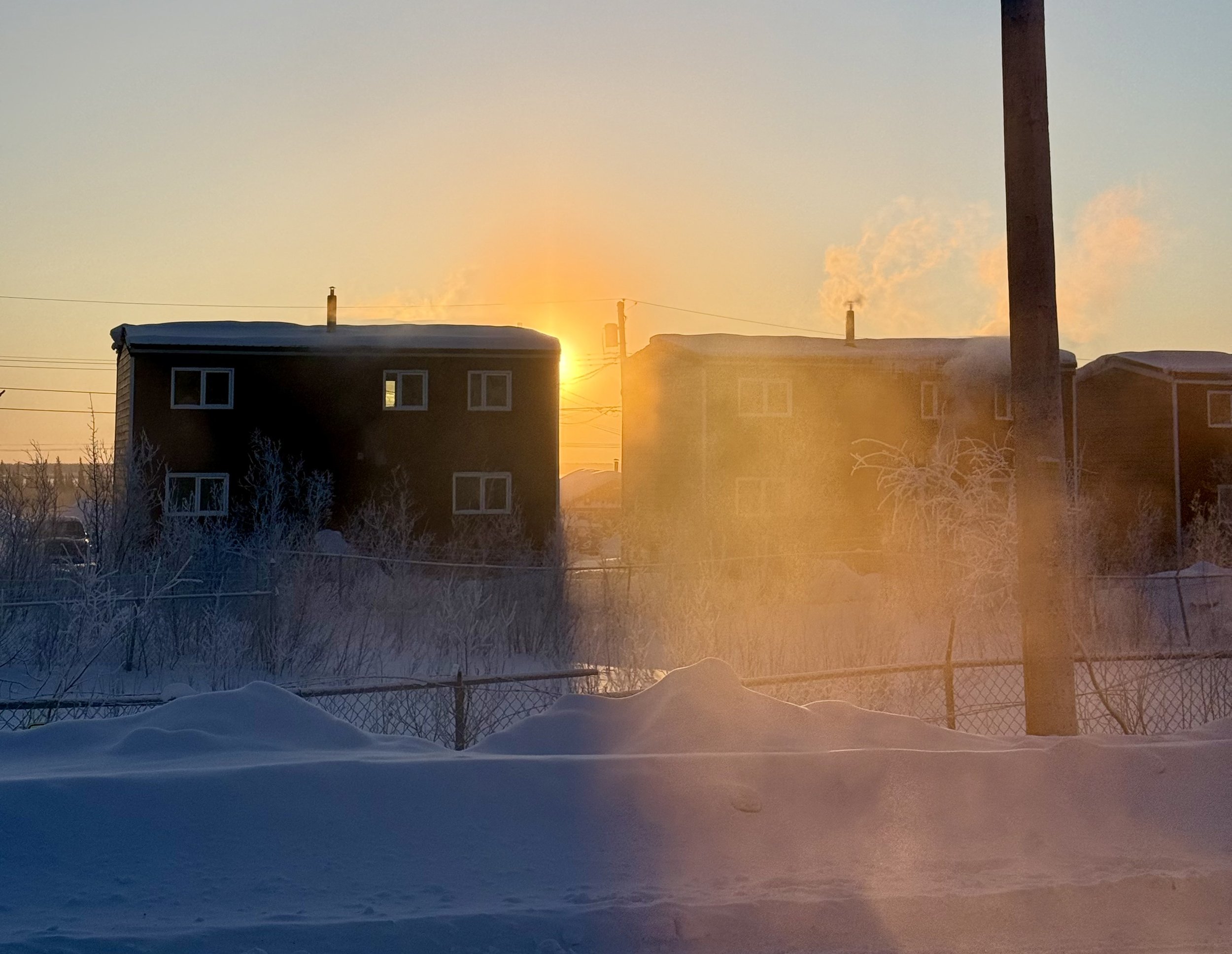
Somehow it’s April. Winter slipped by quickly this year, despite the extreme conditions that Mother Nature chucked at us, including record-breaking amounts of snow and persistently frigid temperatures. Longtime Yukoners bragged, “Oh, this is the real Yukon winter,” but the stats showed otherwise: this winter was an anomaly in extremes. Many communities broke records for prolonged cold weather in December, including the town of Faro, which hit a low of -45.6 Celsius on December 11th, the lowest low since 1966.
We fared remarkably well in our Mongolian-made yurt, insulated with a double layer of sheep’s wool. “It’s like living in a parka,” my partner, Mike, often jokes. Our circular, one-room home was easy to heat, fed by a catalytic wood stove that efficiently holds a coal. We realized, in late December, when the Yukon Government issued a statement that the electrical grid was about to be overwhelmed—reaching peak demand of 123 megawatts—and the threat of blackouts at -40 C loomed, living off-grid has its advantages. We didn’t have to contend with frozen pipes, propane tanks, or potential blackouts. We did have to contend with using the outhouse at those temperatures, but that felt like a small price to pay for avoiding more major inconveniences. Perhaps the biggest inconvenience of all was not being able to safely recreate in the outdoors. I ceased running and cross-country skiing when the temperature plunged under -35 C. Even the Siberian husky didn’t want to be outside.
That said, a part of me loved the extremity of it. The vehicles that don’t want to start. The precariousness of going anywhere. The urgency of care we exhibit for one another, understanding intimately what’s at stake. Every winter, I think fondly of the words of Gretel Ehrlich: “The deep ache of this audacious Arctic air is also the ache in our lives made visible. It strips what is ornamental in us…Twenty or thirty below makes the breath we exchange visible: all of mine for all of yours.”
Now we’ve passed the Spring Equinox, and the temperatures have warmed, but it’s still snowing outside. It’s a lazy wet snow that melts upon contact. As I write, I can hear the yurt shedding water, a trickling sound. A now familiar smell hits my nostrils.
Whenever there’s a temperature change outside—a freeze-thaw—the yurt emits a scent that’s earthy and sweet. Sheep’s wool. Living in the thin-skinned yurt makes me feel the weather in a new way.
Maybe you are tired of snow and ice, ready for the rush of moving water, the verdant green that rises with warmer temperatures. In the Yukon, there’s still 1.5 meters of snow outside. Over the past four months, snow and ice have been a common thread through many of my writing assignments. Many of the stories, which I’ve been at various stages with—from conception to fieldwork to writing—focus on intimate relationships between people and winter. Before the snow and ice vanish, I’d like to pay homage to some of these stories that have enchanted me so.
ANCIENT ICE CORES
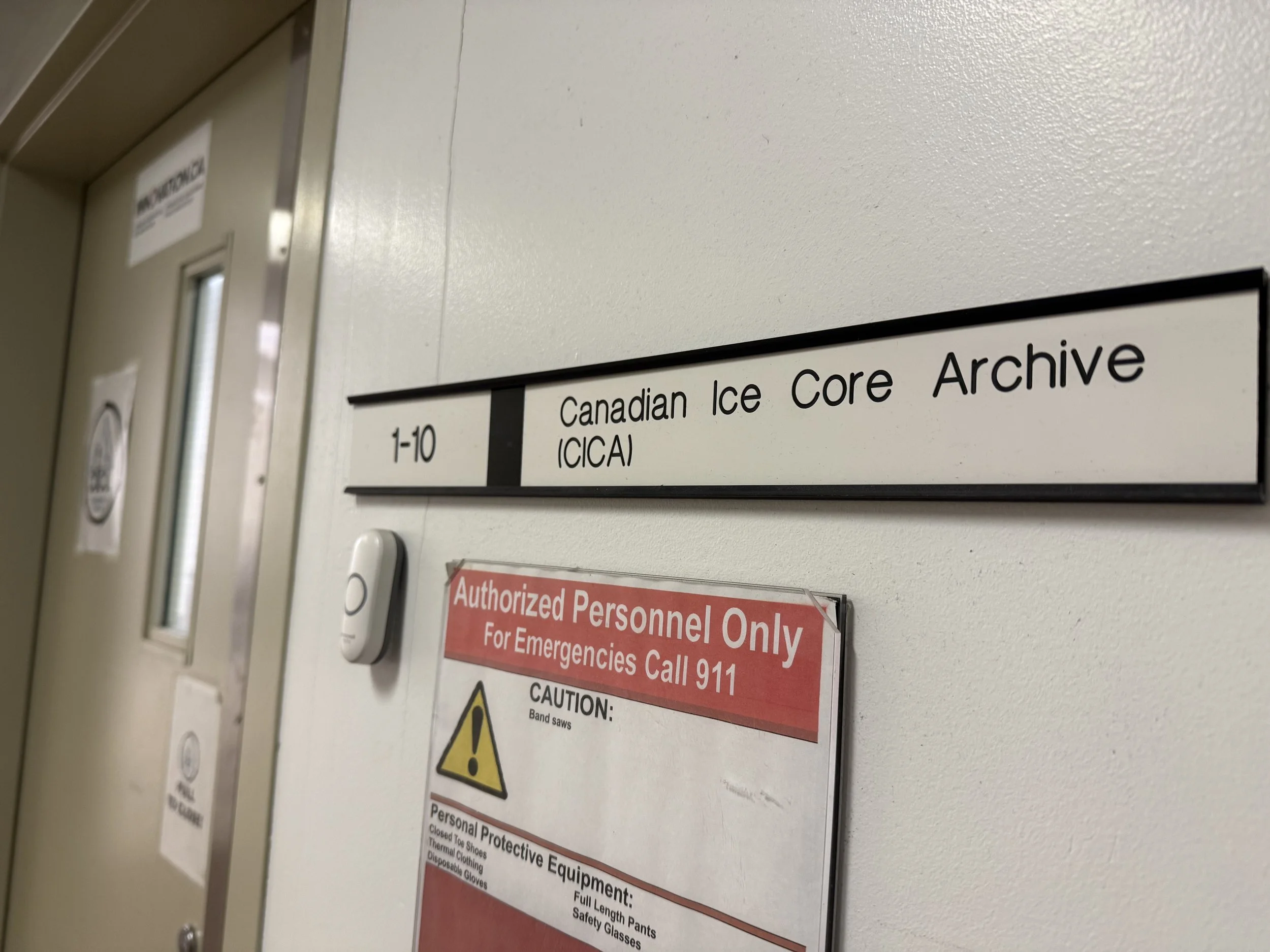
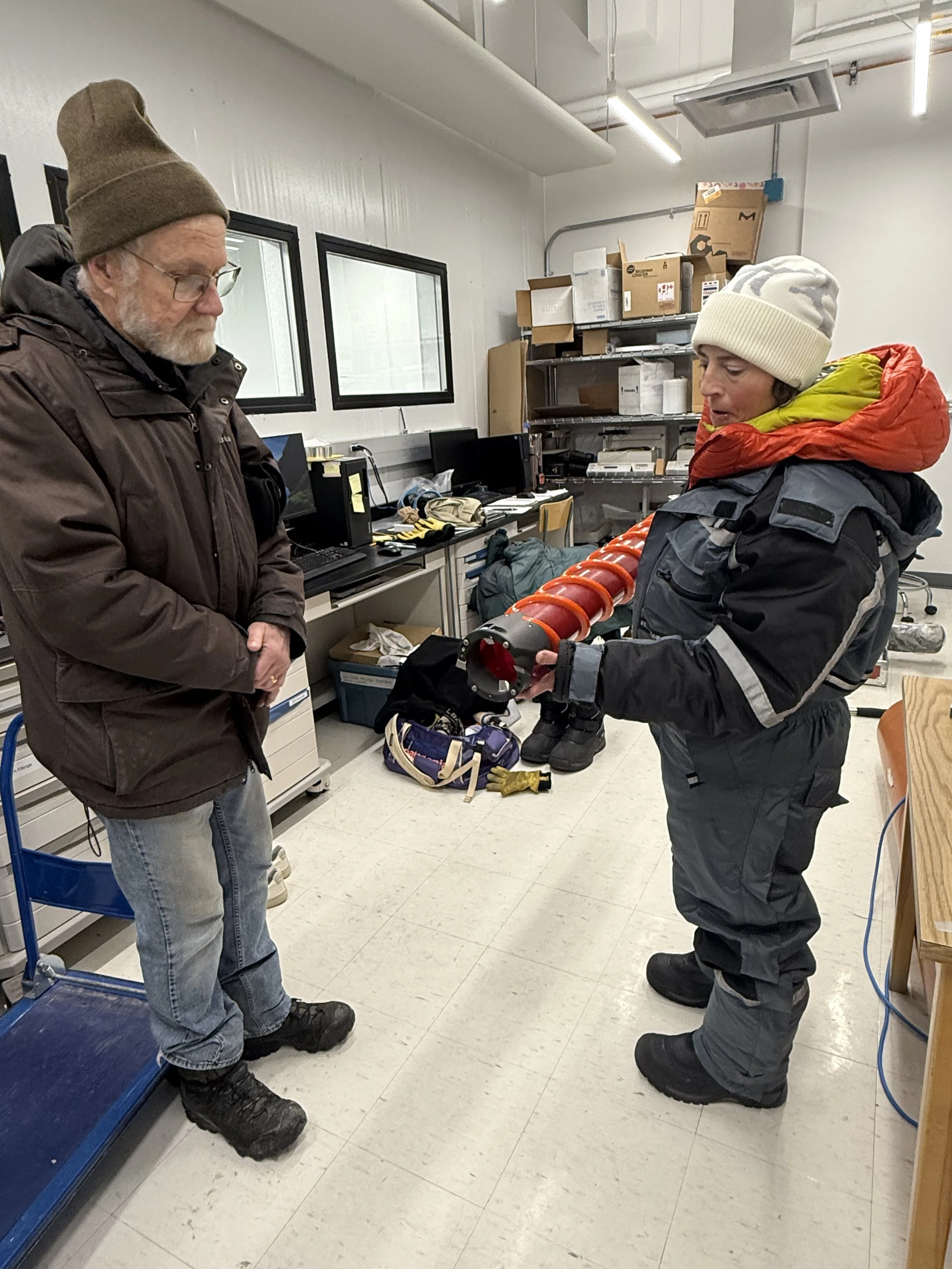
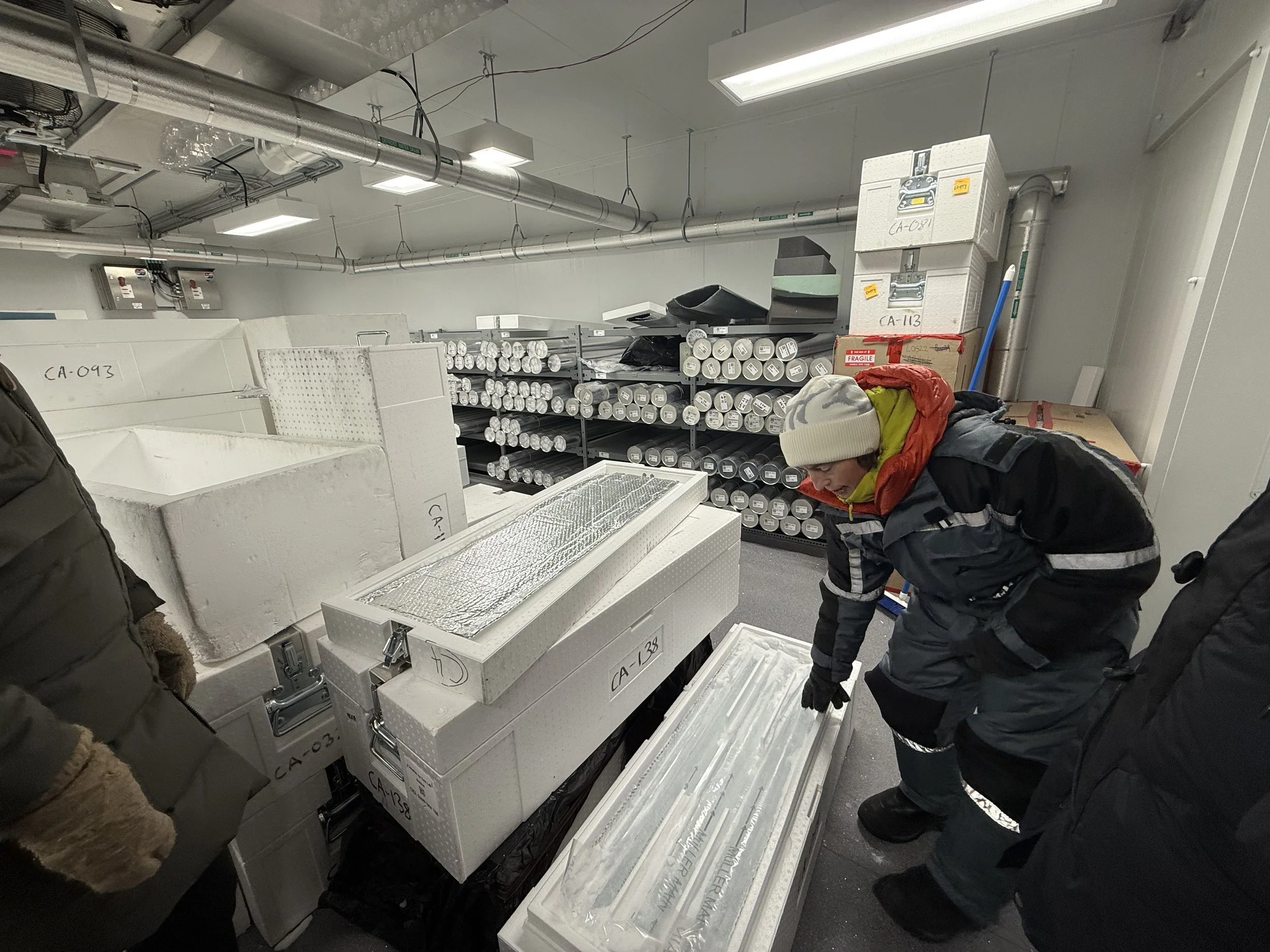
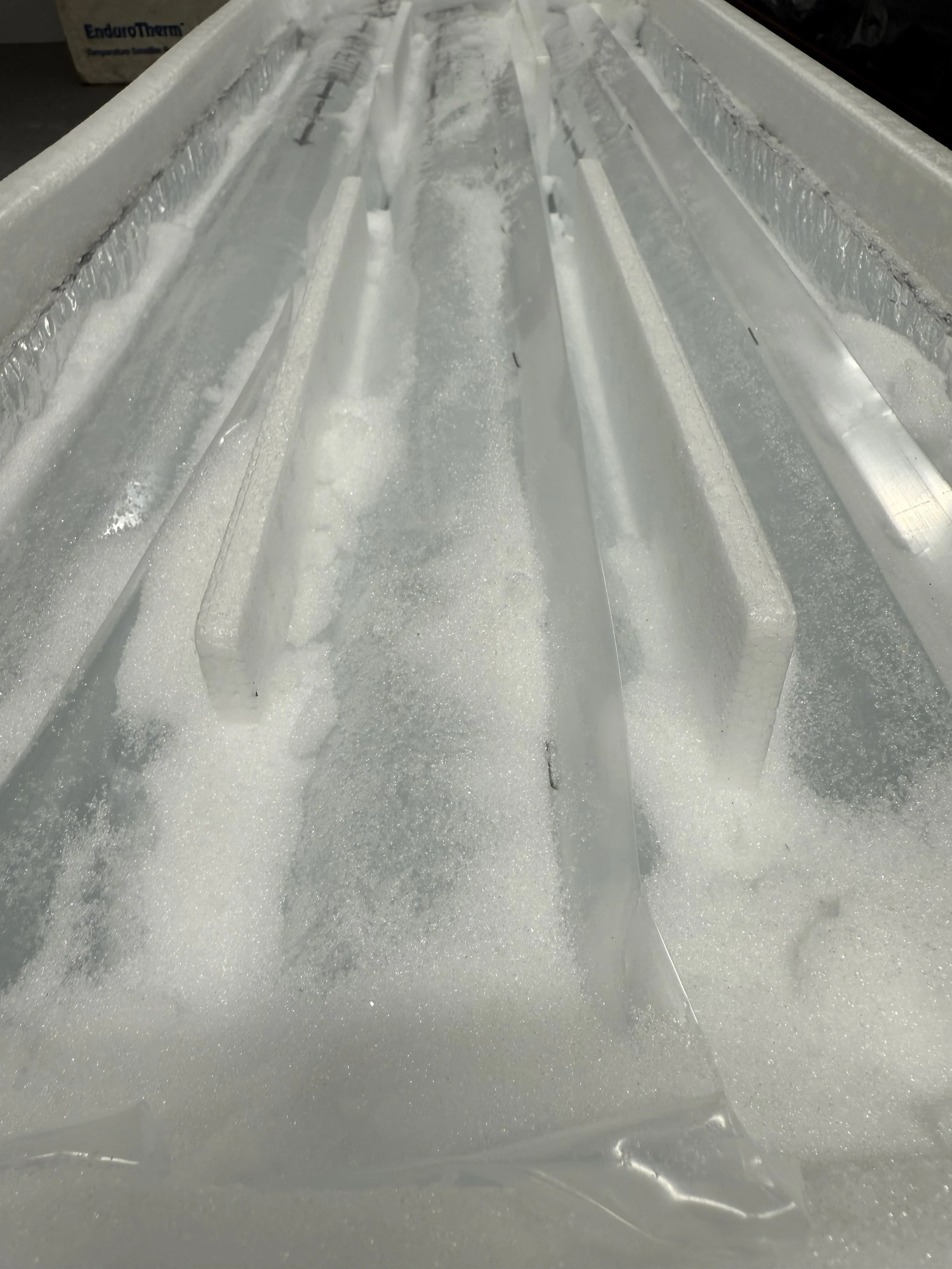
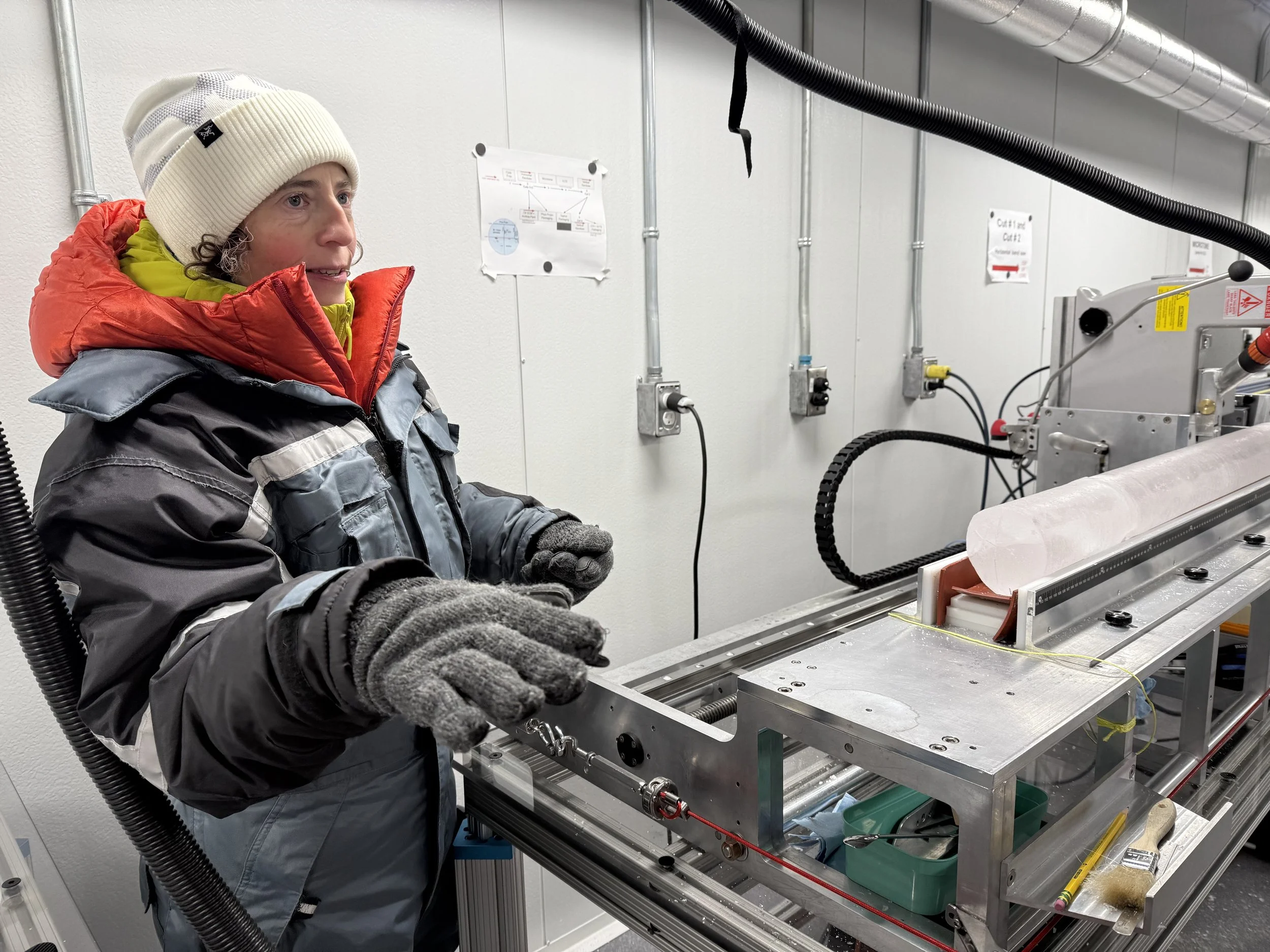
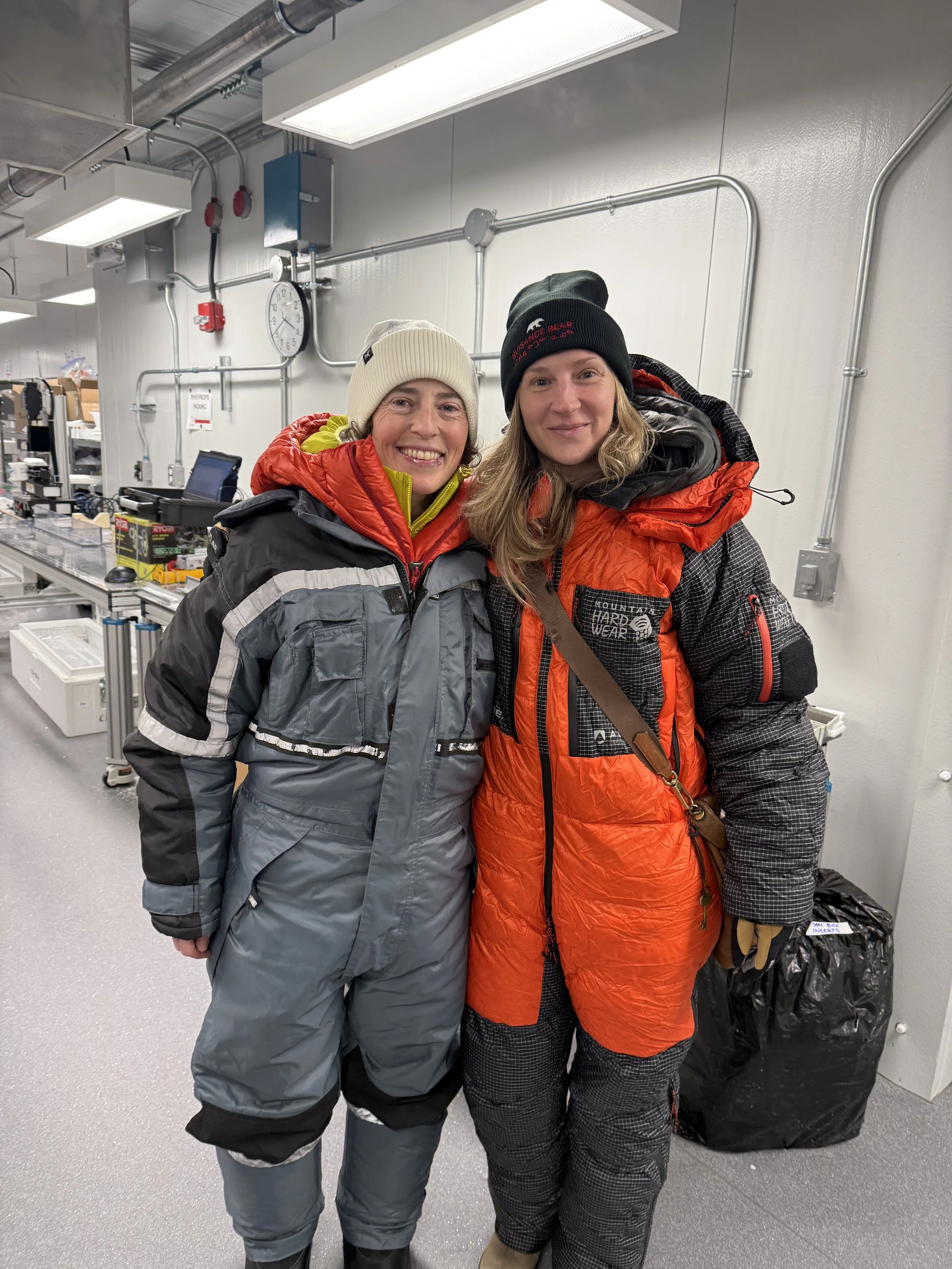
In late January, I jumped at the chance to visit the Canadian Ice Core Archive (CICA) at the University of Alberta. The archives are located behind a nondescript, sand-coloured door in a basement hallway. Students stream by, eyes glued to their phones, unknowing of what ancient magic lives on the other side. The two-room freezer lab contains stacked boxes of ice core samples, packed with snow to prevent sublimation, ready to be processed and studied by an inspiring team of scientists. The long-term ice core samples are kept at -40 Celsius, while the “working freezer”, or processing lab, is kept at -27 C—the “sweet spot for being able to keep people in there for eight to ten hours,” says lead ice core scientist and explorer, Alison Criscitiello.
Okay, I rarely fangirl, but was I stoked to meet Alison and be offered a window into her work? Yes, yes I was. And did I wonder, as she generously offered to lend me her down-insulated coveralls to wear in the lab, Did she wear this on her summit of Mount Logan, or the Müller Ice Cap on Axel Heiberg Island? Yes, yes I did. Alison is a badass in every sense of the word. Last year, she and her team traveled to Umingmat Nunaat, Nunavut to drill a 613-metre ice core from the Müller Ice Cap—the deepest ever drilled in the Americas. “[The CICA] didn’t hire a curator…they hired someone who loves drilling, so now we have 4.5 kilometres of ice which is over the capacity of this room,” Alison says, adding that there’s an additional 2 kilometres ice out in the parking lot, contained in a freezer sea can, until she gets the funding to expand (hopefully soon).
That week, Alison and her team were on the homestretch of cutting and imaging the 613-metre ice core from the Müller Ice Cap. Why study ice? “Ice holds stories,” she told me over a Zoom call last December. Her words followed me around all winter. In the lab, she and her team are working to decipher stories from the ice, which contains important records about Arctic Ocean ice variability and climate records spanning millennia.
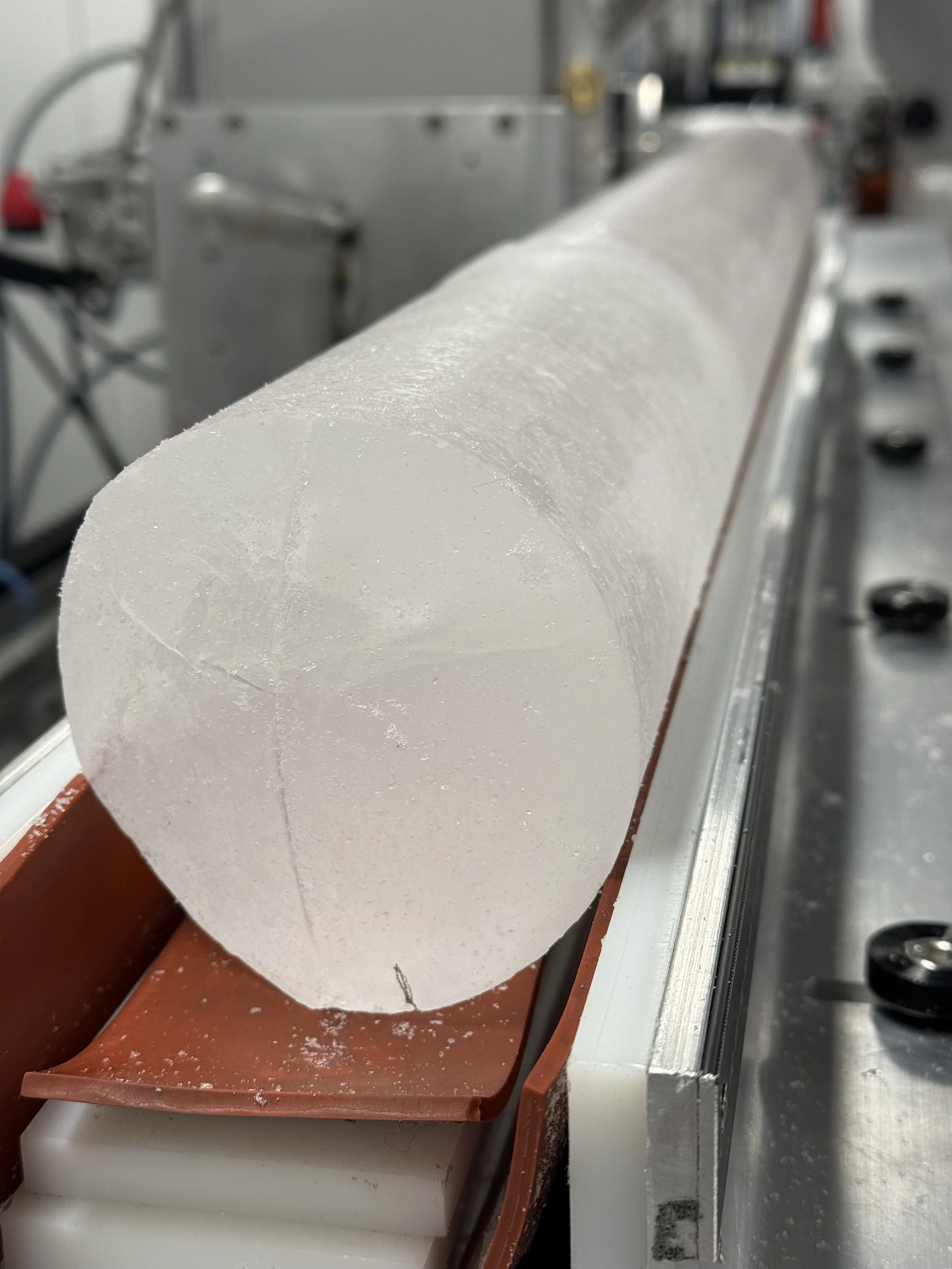
Alison isn’t yet sure how old the “ancient ice” from the Müller Ice Cap really is, but it’s at least 12,000 years old, and potentially upwards of 20,000 to 30,000 years old, she says.
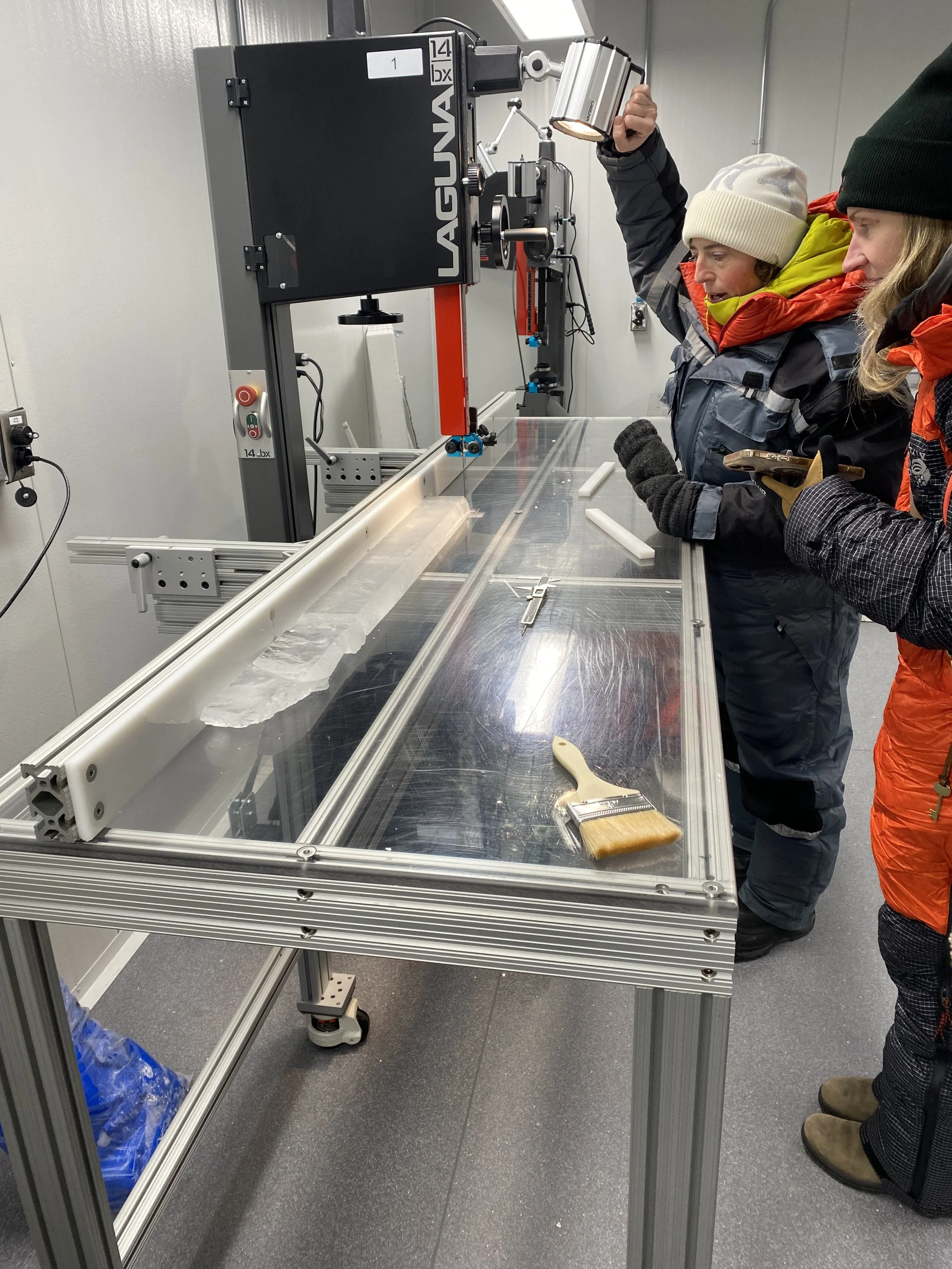
In the working freezer, she and her team process the ice core samples—which were strategically flown from community freezer to community freezer to reach the archives—by slicing into the cylinder with a horizontal band saw. “The most precious stick is in the middle of that cylinder, a square 3x3 centimetre stick,” Alison shows us. “And that is the most pristine part of the core… we actually melt it continuously… so you can measure in a continuous fashion.”
Cutting into 30,000 year old ice cores is precarious work, no doubt. There are, what Alison refers to as, “explosions” as the ice cylinder is subject to pressure as it’s fed through the band saw. She points to a recent shattered calamity. “This was the shitty one that exploded at the end,” she says remorsefully. “I can’t really bear to say out loud how much time that is…but it’ll be a gap in the time series.” Losses, however, are to be expected in this fragile business. Alison and her team are eager to unlock the ice’s secrets—preserving past climate records, including wildfire frequency and intensity—while helping to predict future climate.
I’m moving glacially slowly on this story about Alison’s work; I want it be a poetic ode to the stories contained in ice and the people working to translate their meaning. More soon, I promise. For now, you can read more about her team’s incredible work in this article “Hard Core: How a team drilled a record ice core in the Canadian High Arctic” by Canadian Geographic writer and editor, Abi Hayward, which was published in the March/April issue. I also love this profile of Ali by Tim Querengesser for CanGeo, in which he queries her love for glaciers and ice, despite the risks. “The cold really forces you to live simply,” she said to Tim. “It doesn’t care about you. Everything is reduced to these fickle, survivalist needs. There’s something about that I seem to crave.”
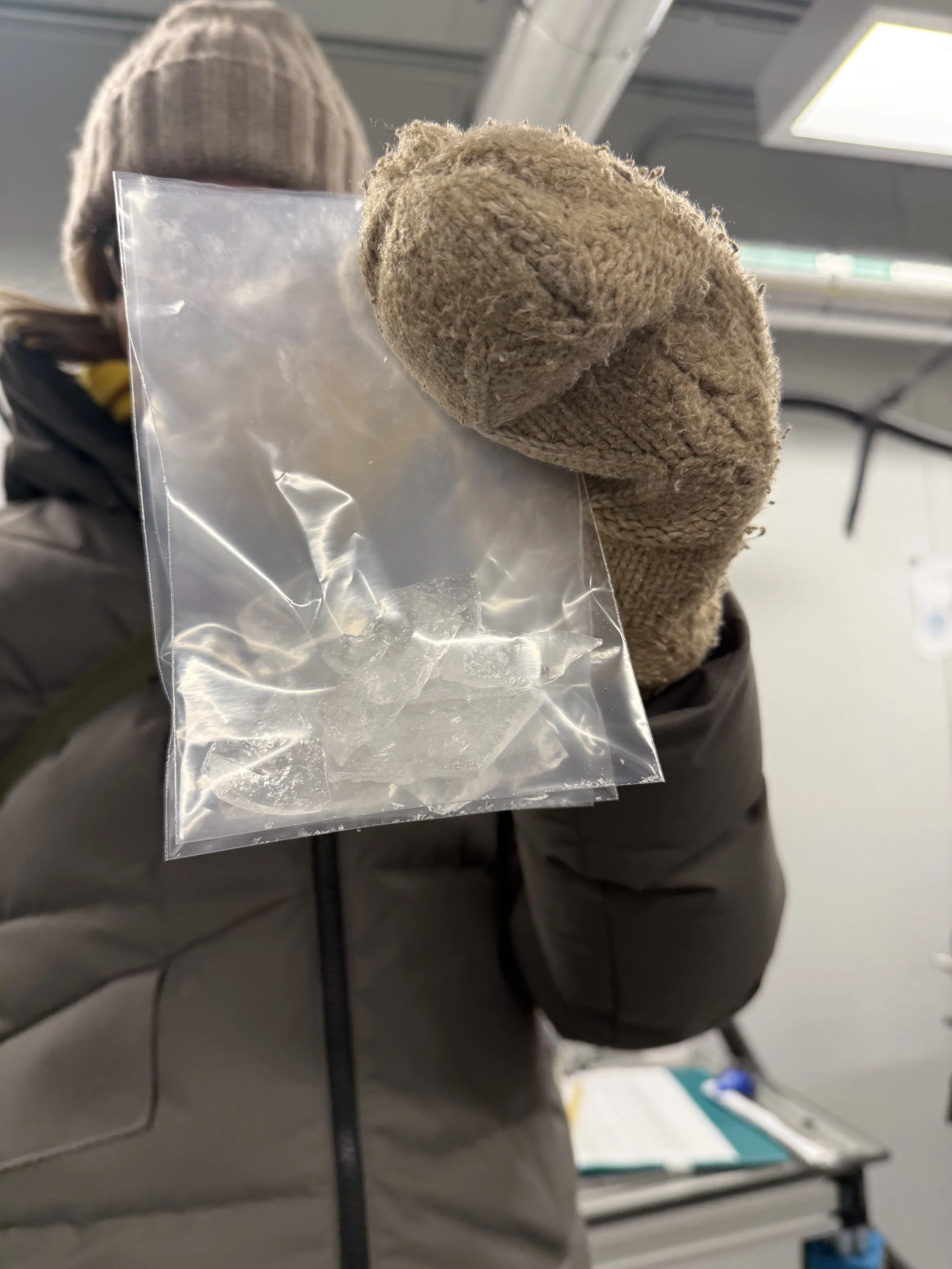
Huge thanks to Ali and her team for hosting us at the lab—myself, two wildfire scientist friends, and my dad. Ali sent us home with a “goodie bag” of ancient ice shards, which we promptly drank with a splash of whiskey. I leave you with this video, capturing the sounds of ancient ice—popping, crackling, hissing—and the enthusiasm of us mere mortals who enjoyed the taste. How did it taste? As sweet as history being made.
TRAVELS TO INUVIK
Mid-February, I traveled to the Arctic community of Inuvik, N.W.T. with my partner-in-crime, Mike Code, to report on the Porcupine Caribou Management Board’s annual harvest meeting, on assignment for Canadian Geographic. It was the farthest north I’ve ever been. Inuvik is located 200 kilometres north of the Arctic Circle along the Mackenzie Delta. We flew from Whitehorse, landing in Inuvik in the early hours of the morning. The darkness was thick. We caught a ride with a biologist from Dawson City, Yukon, who’d come to attend the meeting.
It was -38 Celsius. We rushed from out of the cab, the cold stabbing our cheeks, into the warmth of the log-built friendship centre where the meeting had already begun. Indigenous leaders, Elders, youth, and land guardians from eight different communities in Yukon and N.W.T. had come to share presentations about the Porcupine caribou herd. Scientists and wildlife managers were present, too, to share their research. In January, the results of a successful photo-census, taken in July 2025, had been announced: the Porcupine caribou herd has plummeted from 218,000 in 2017 (an all-time high) to 143,000 animals.
The news of the herd’s decline coincided with the U.S. Bureau of Land Management’s call for nominations for companies to identify 115 land tracts within the Arctic Refuge for the purposes of oil and gas development—right in the heart of the herd’s calving grounds. The window of time for communities to submit their own feedback as to why oil and gas shouldn’t be allowed in the Refuge had been shortened from 60 days to 30 days. Community leaders grumbled that the Trump government was “fast-tracking” the process intentionally. While this has been a decades-long ideological battle—to drill, or not to drill in the Arctic Refuge—the threat has never been more imminent.
Despite everything that’s at stake, the energy in the log-built room in Inuvik was warm, friendly, vivacious.
It reminded me a bit of the same spirit I’d felt participating in Caribou Days in Old Crow last spring. It was obvious that people in the room had known and worked together for decades; the Porcupine caribou herd is unique in that it’s backed by serious people power. There are national and international frameworks in place for monitoring and advocating for the herd; there’s the Gwich’in Steering Committee, involving Gwich’in communities from Canada and Alaska. There’s researchers and environmental organizations, too.
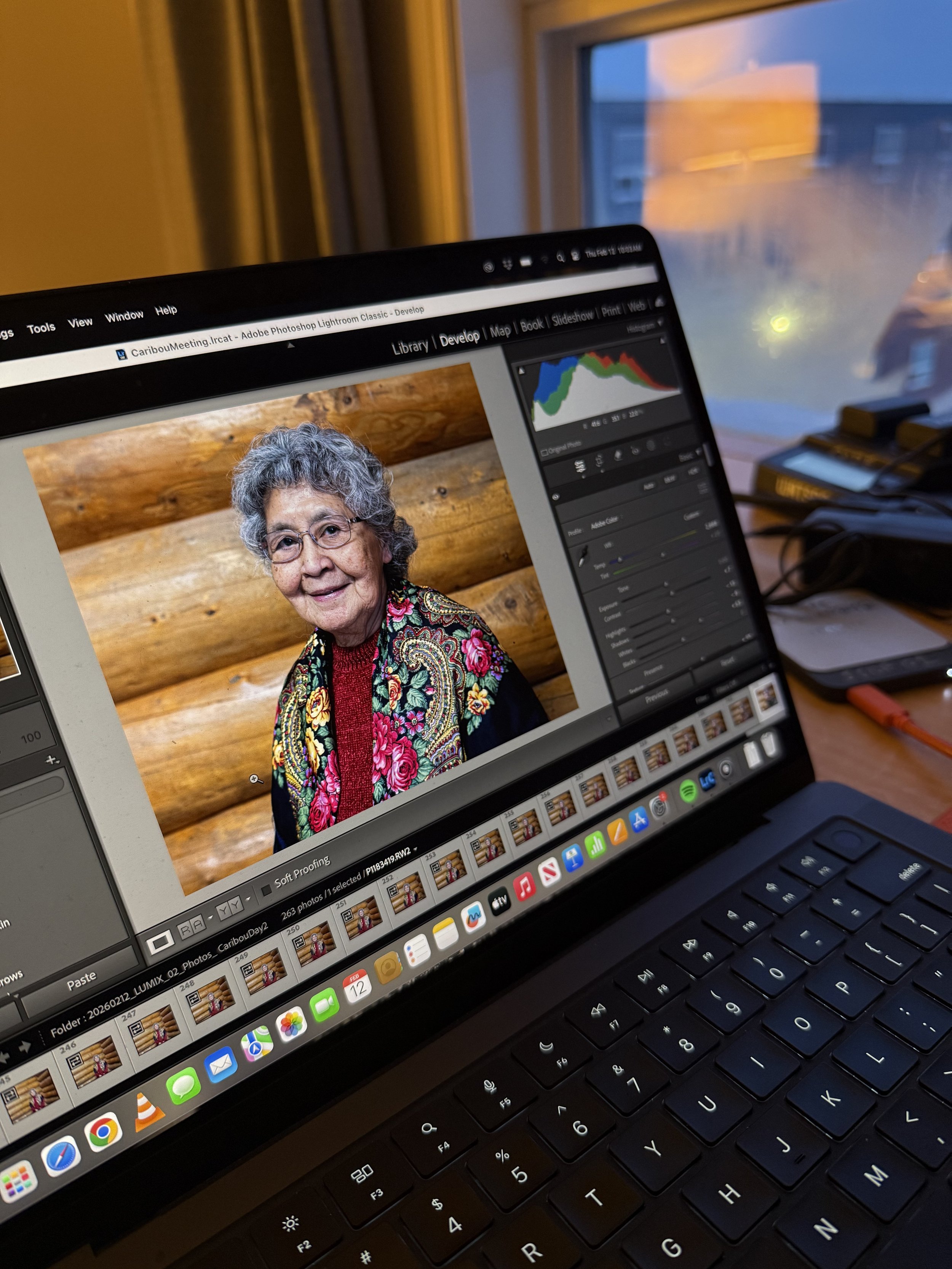
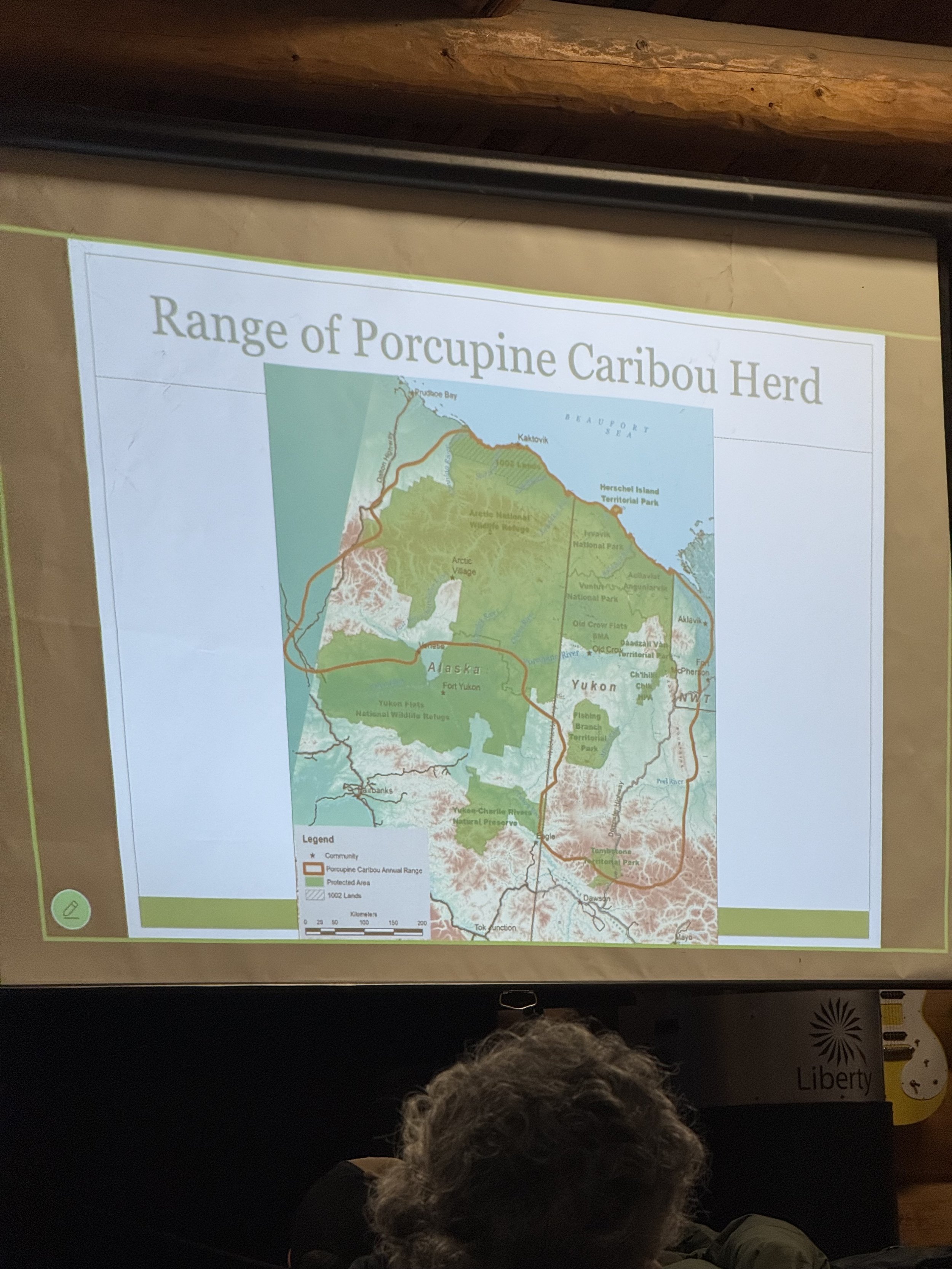
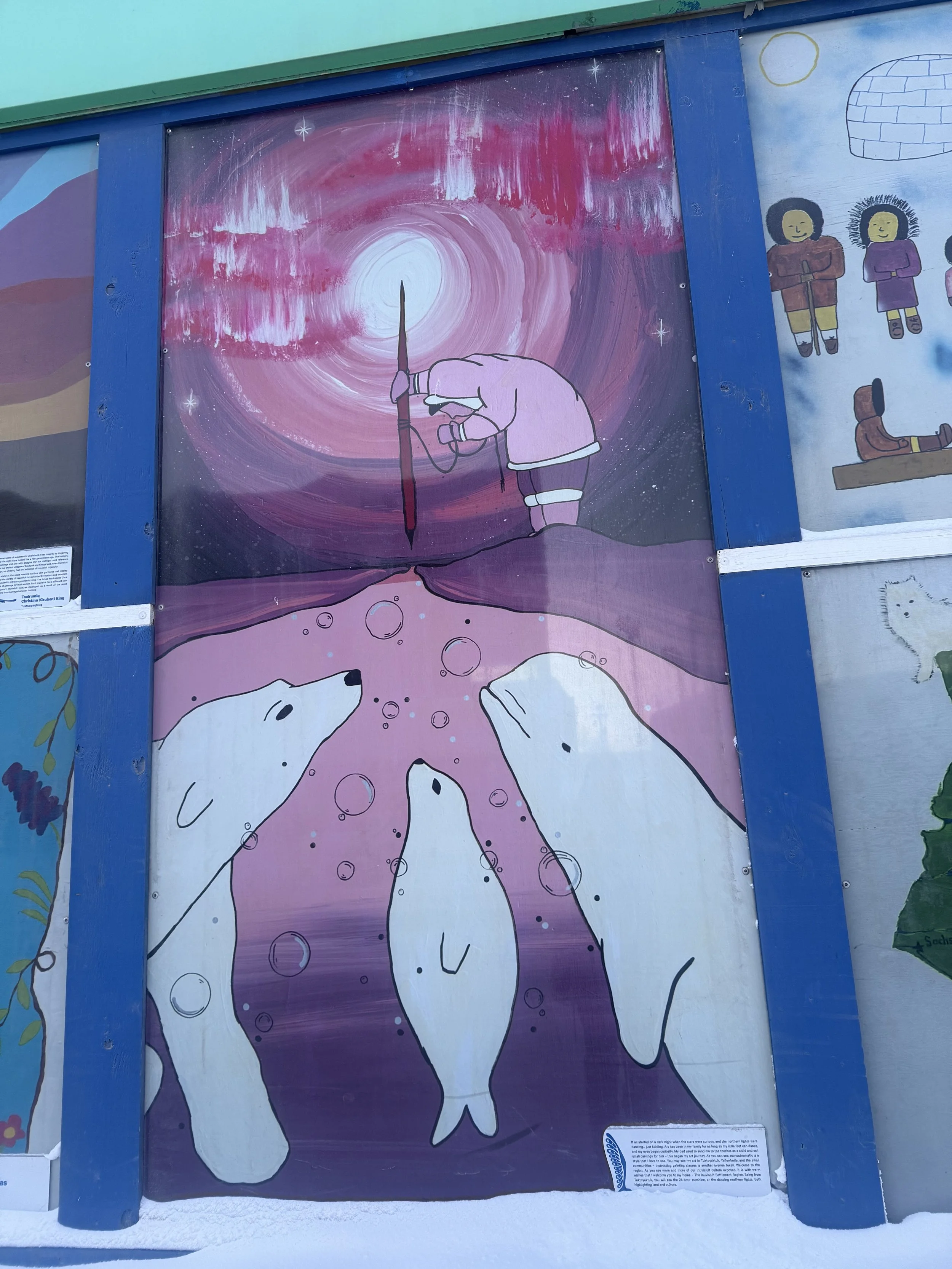
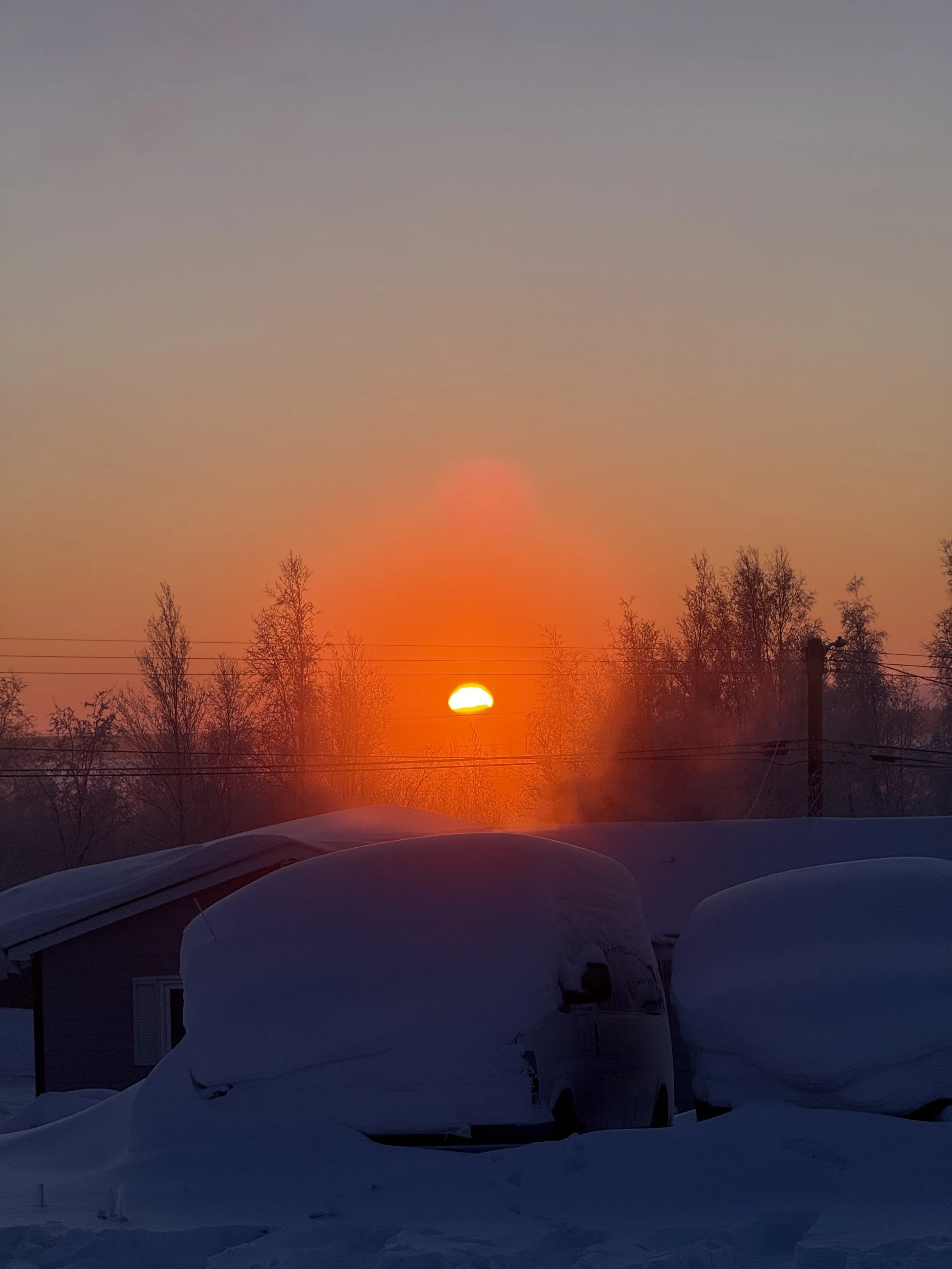
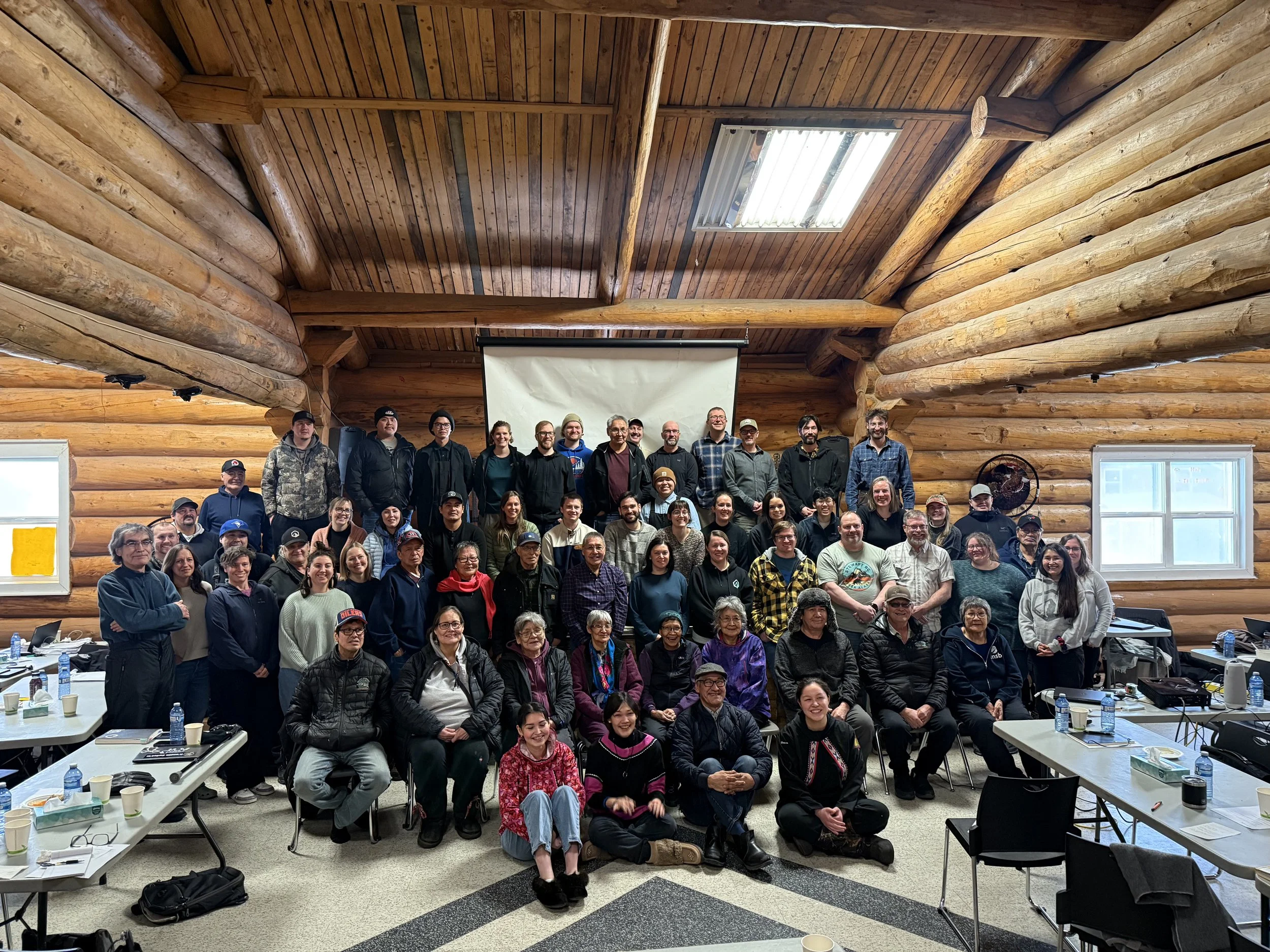
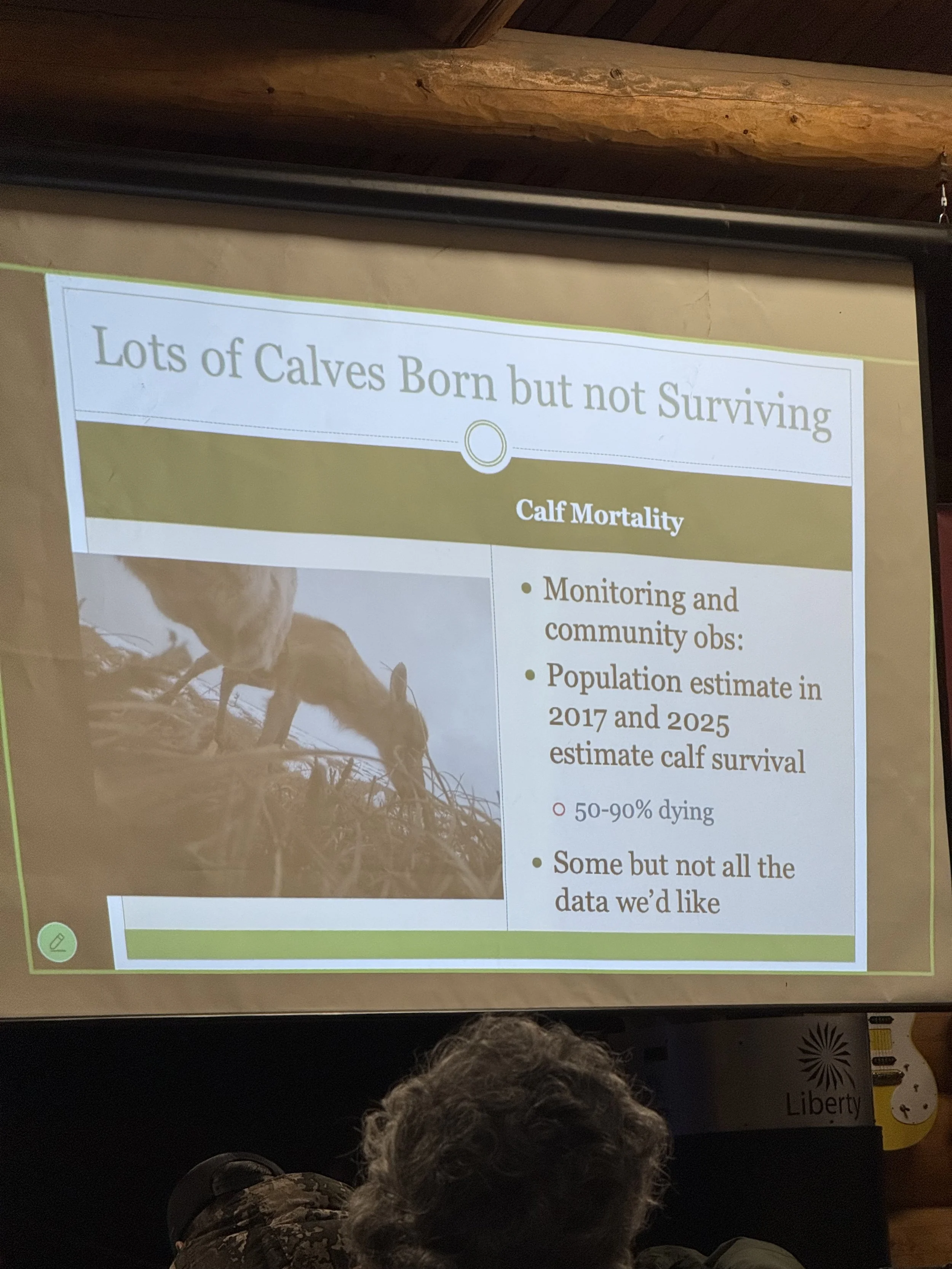
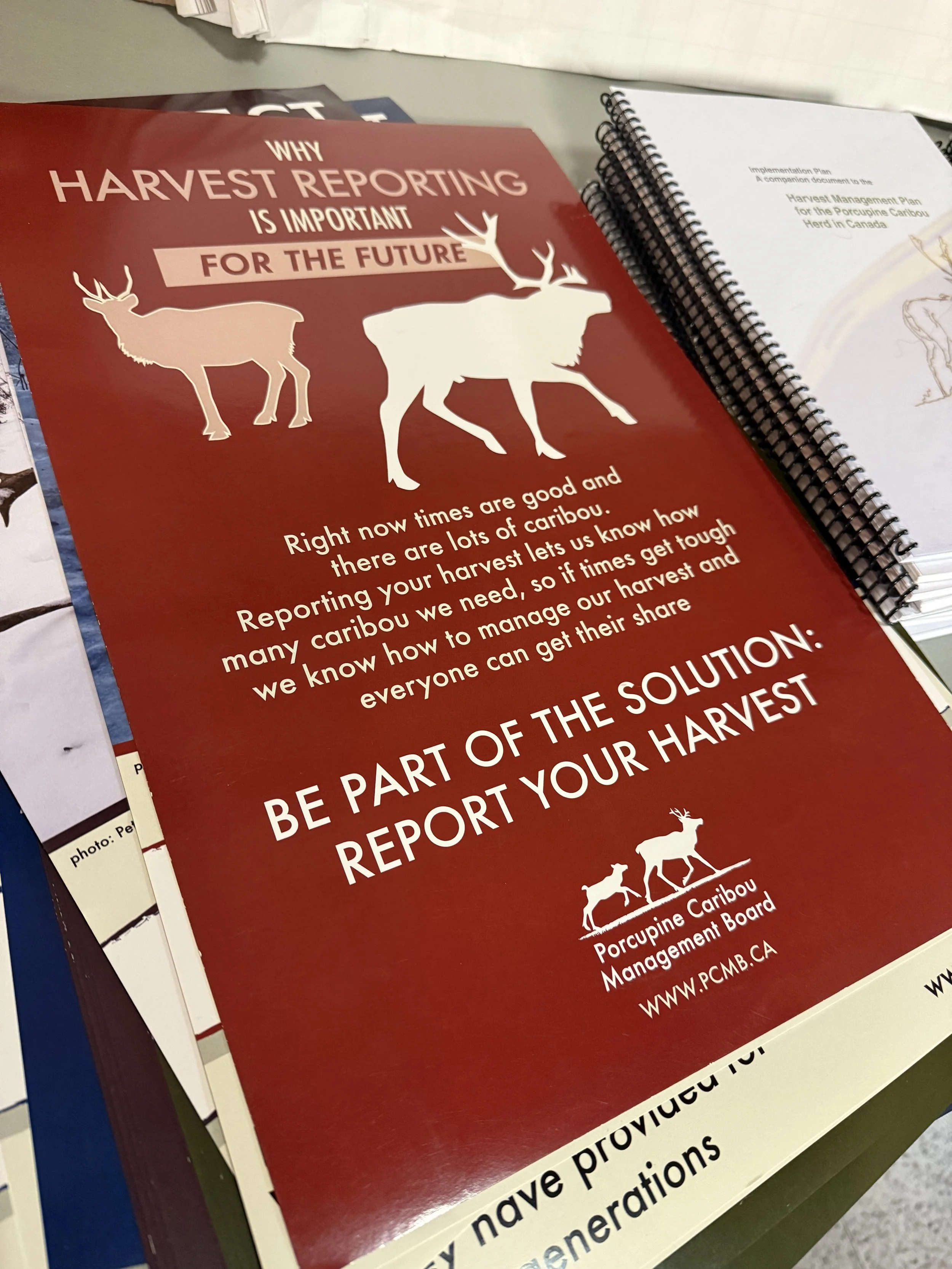
I don’t want to wander too deep into the story—which will be published in the July/August issue of Canadian Geographic—but one of the highlights for me was meeting Tetlit Gwich’in Elder, Sarah Jerome, who grew up in Fort McPherson, N.W.T., and lives in Inuvik today. During one of the presentations, she stood up to share about her frustration of having to continually buy beef in the grocery story—many communities haven’t been able to reliably harvest caribou from the herd in over a decade. It isn’t understood why, but the Porcupine caribou herd’s winter range has shifted dramatically. “It got to the point where I was kind of frustrated because I had to buy beef, and we’re not used to that… Now that the caribou are not coming back from Alaska long enough to do our harvesting, it’s kind of really sad and really frustrating for us,” she told me later.
For Jerome, and for many Gwich’in and Inuvialuit people, caribou are at the heart of memory, identity, and culture. Her earliest memories are steeped in caribou—and they are happy ones, she tells me, with a huge smile. One of her favourite memories is when she was 18-years-old and volunteered to help her sister transport harvested caribou meat from a cabin to their home in Fort McPherson. They traveled by dog sled in the middle of the night.
“Six o’clock in the morning, we had all our dogs in a harness. Pitch black, no stars, nothing… She said, ‘You ready?’ And I said, ‘I’m scared to go down…’…We got down…and then she said, ‘You ready?’ I said, ‘Yes.’ So we went and the only way I knew where she was was when she had a lit cigarette,” she laughs.
I left Inuvik heartened by the number of people working together to protect the Porcupine caribou herd, although the fate of the Arctic Refuge is uncertain. Reinstated oil and gas leases are permitted to conduct 3D seismic testing, and another mandated oil and gas lease sale must occur by July 4, 2026.
Stay tuned to read more about our feature story for Canadian Geographic, which will hit newsstands in mid-June…
Though I didn’t get to explore Inuvik as I would’ve liked, I enjoyed the short, cold walks from the hotel to the friendship centre, and back again. One day, we spied an urban arctic fox scurrying, cat-like, nearly camouflaged against the snow. Mike thought the arctic fox likely lived under one of the buildings. We studied its tracks leading everywhere—even atop snow-covered vehicles which it seemed to be using as a lookout. They are cute!
SLED DOGS
By the end of February, I was experiencing sled dog racing withdrawal. I missed it: the long, sleepless days and nights. The chorus of hundreds of sled dogs, harnessed, ready to go, jumping on the line.
For the past several years, I’ve been involved as a writer and reporter for the Yukon Quest. But the Quest announced organizational defeat in January, citing financial debt and volunteer board burnout, and that there wouldn’t be a 2026 race. Although it was sad news, many of us who were close to the race saw it coming. After last year’s Quest wrapped up, there were signs of organizational fatigue. I sympathize with organizers. These are hard times for any volunteer organization; over the past few years, the spirit of the Quest has been hit hard by the pandemic, then the falling out with the U.S. board, followed by challenges related to climate change.
But something I deeply admire about mushers—and the long-distance mushing spirit—is their tenacity to adapt in the face of challenge. For local mushers, Nathaniel Hamlyn and Louve Tweddell, who were witnessing the slow erosion of a culture and sport they dearly love, they decided to take matters into their own hands. They’d put on their own race, grass-roots style, back-to-basics. And thus, the Yukon Odyssey was born.
On February 28, Mike and I had the opportunity to document the second annual Yukon Odyssey, a 100-mile, eight-dog race, located in Mendenhall Landing, Yukon. The race attracted a diverse roster of veteran Quest racers and rookie rosters, alike. Mushers traveled from as far as Lake Tahoe, California to compete.
It was a frigid minus -35 Celsius at the start-line in Mendenhall, but the deep cold created all the right conditions for beautiful photography. Every sled dog race photographer is hopeful for that classic shot of the musher and their dogs, covered in icicles. Mike flew the drone, while I was down on the ground, trying my best with a camera. This was new for me! I’m usually the one wandering around with a cell-phone on a gimbal, live-streaming to social media.
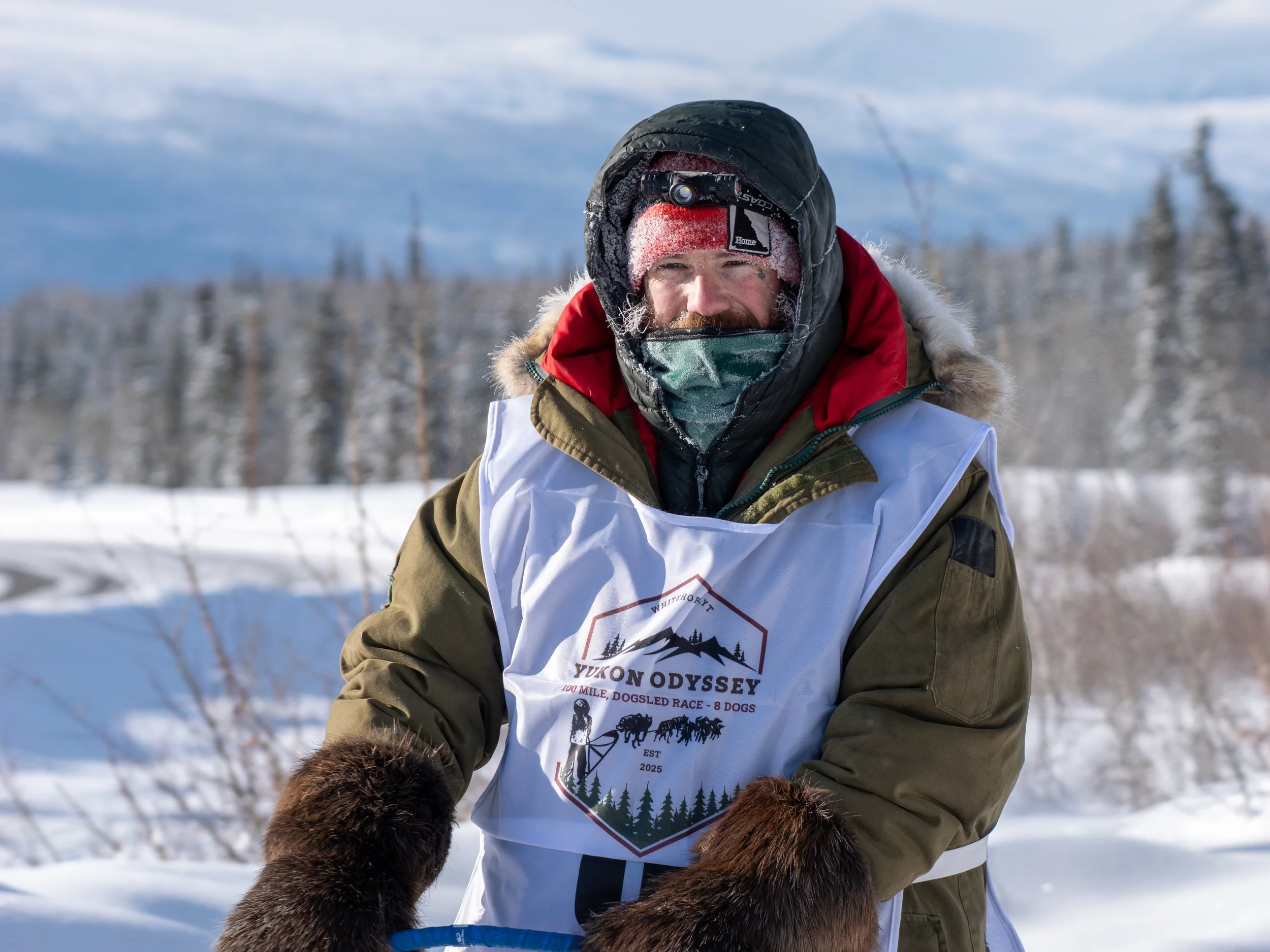
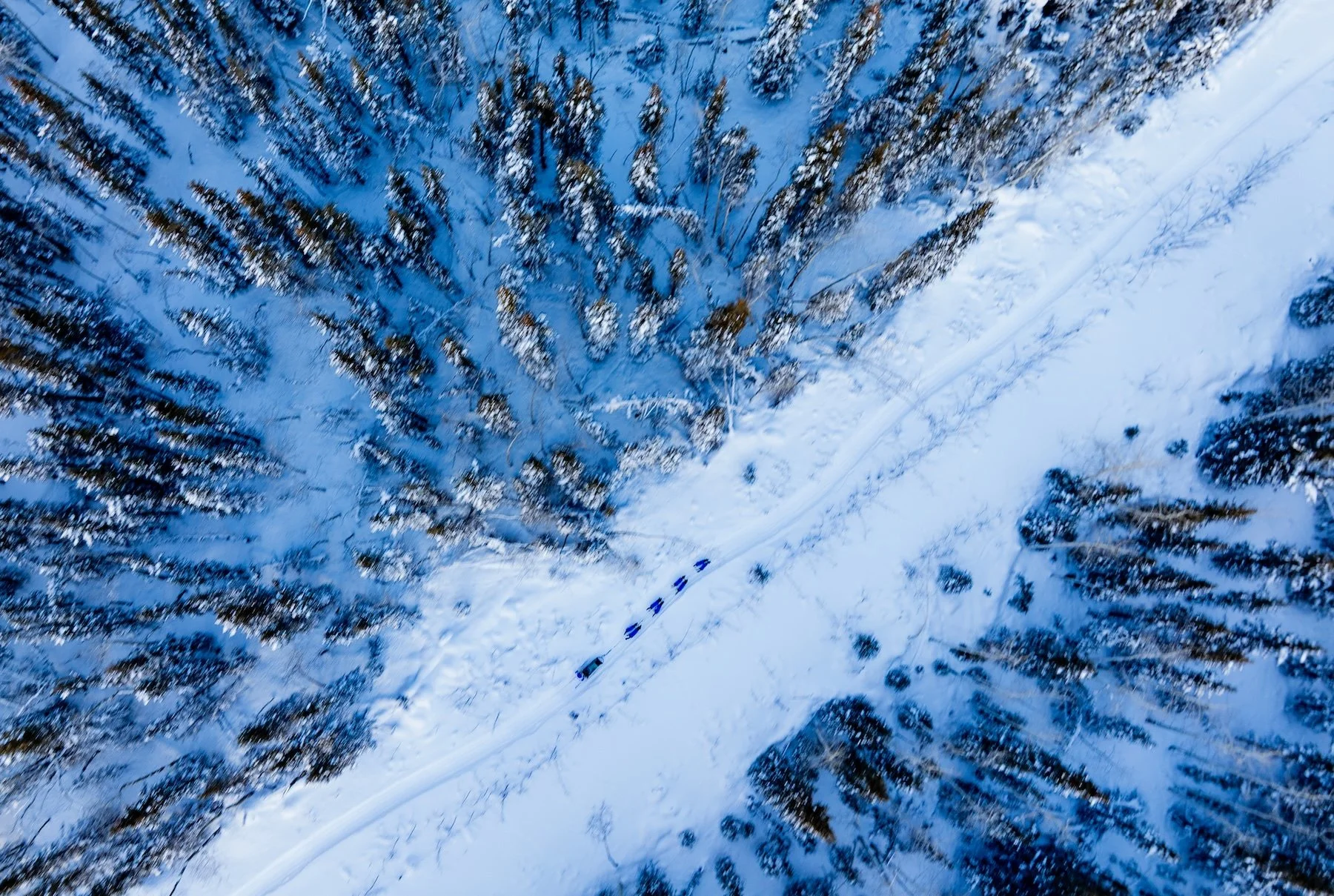
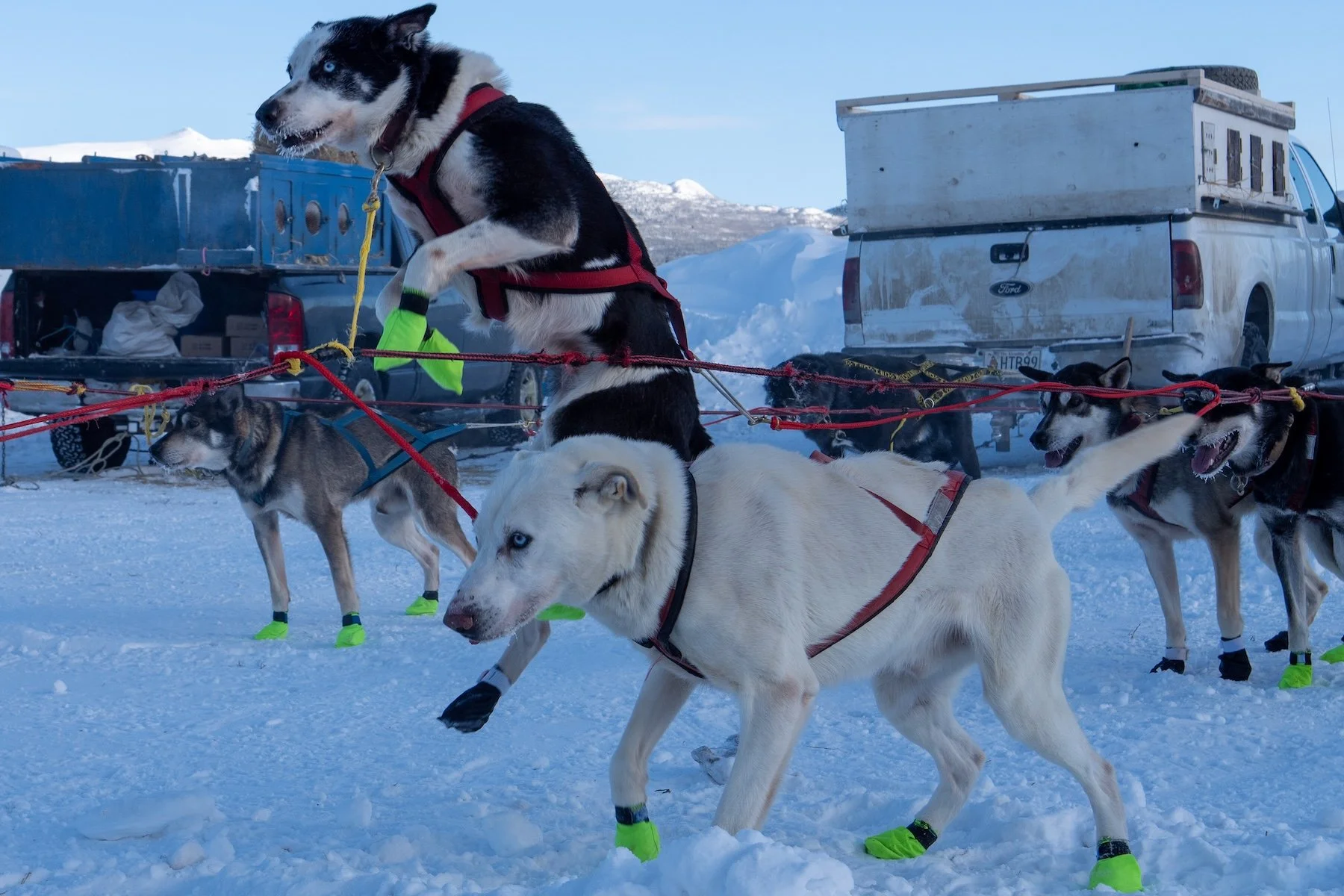
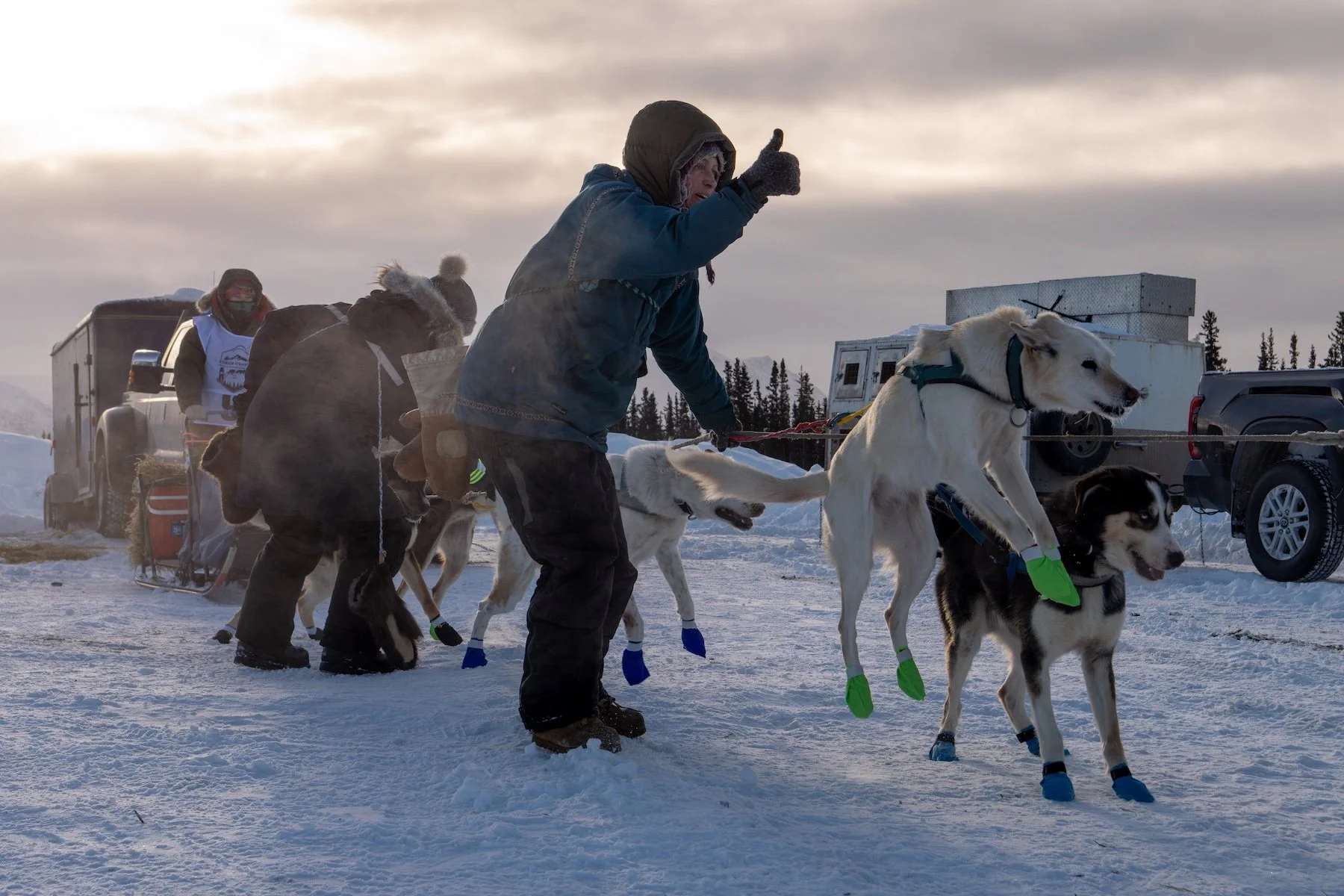
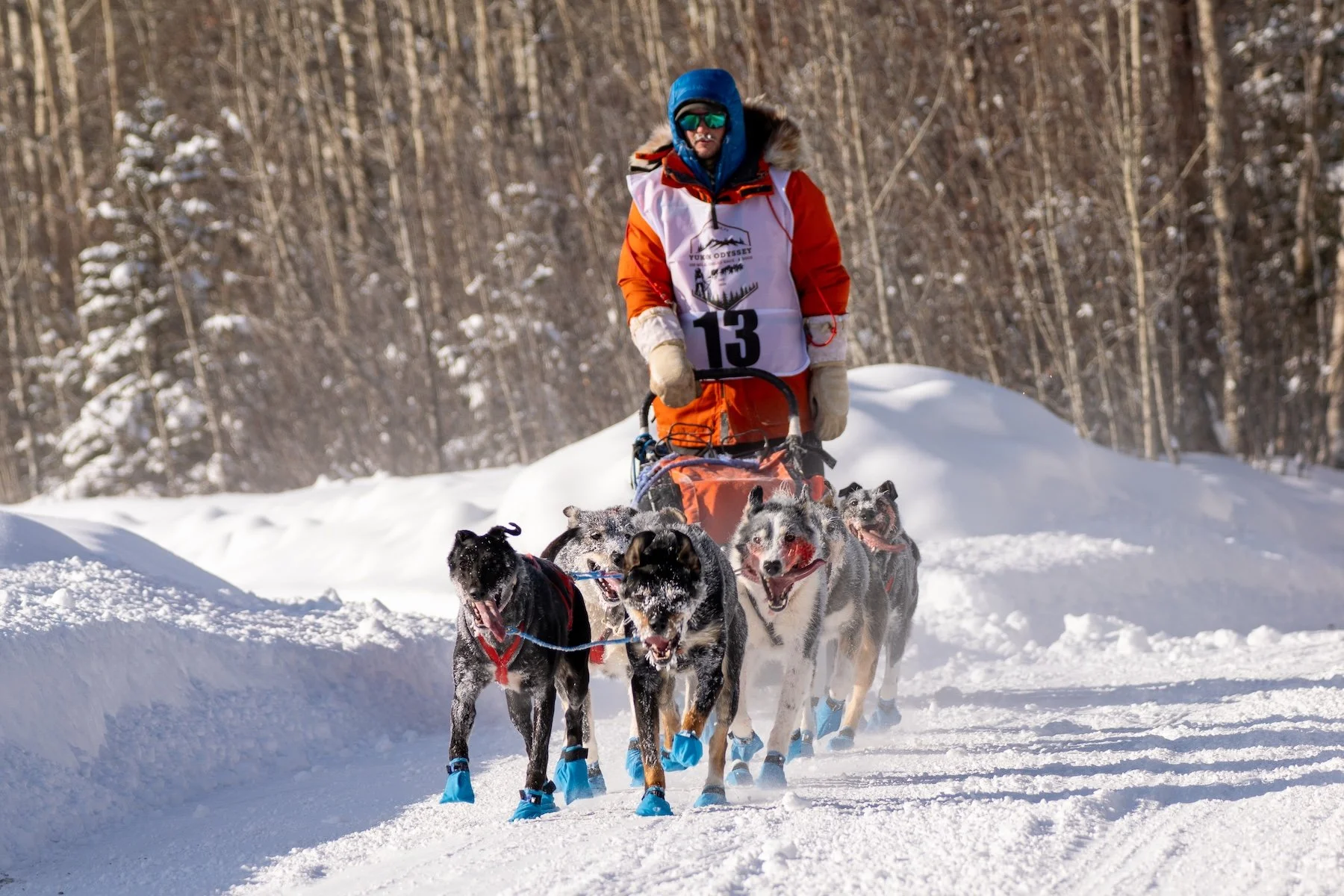
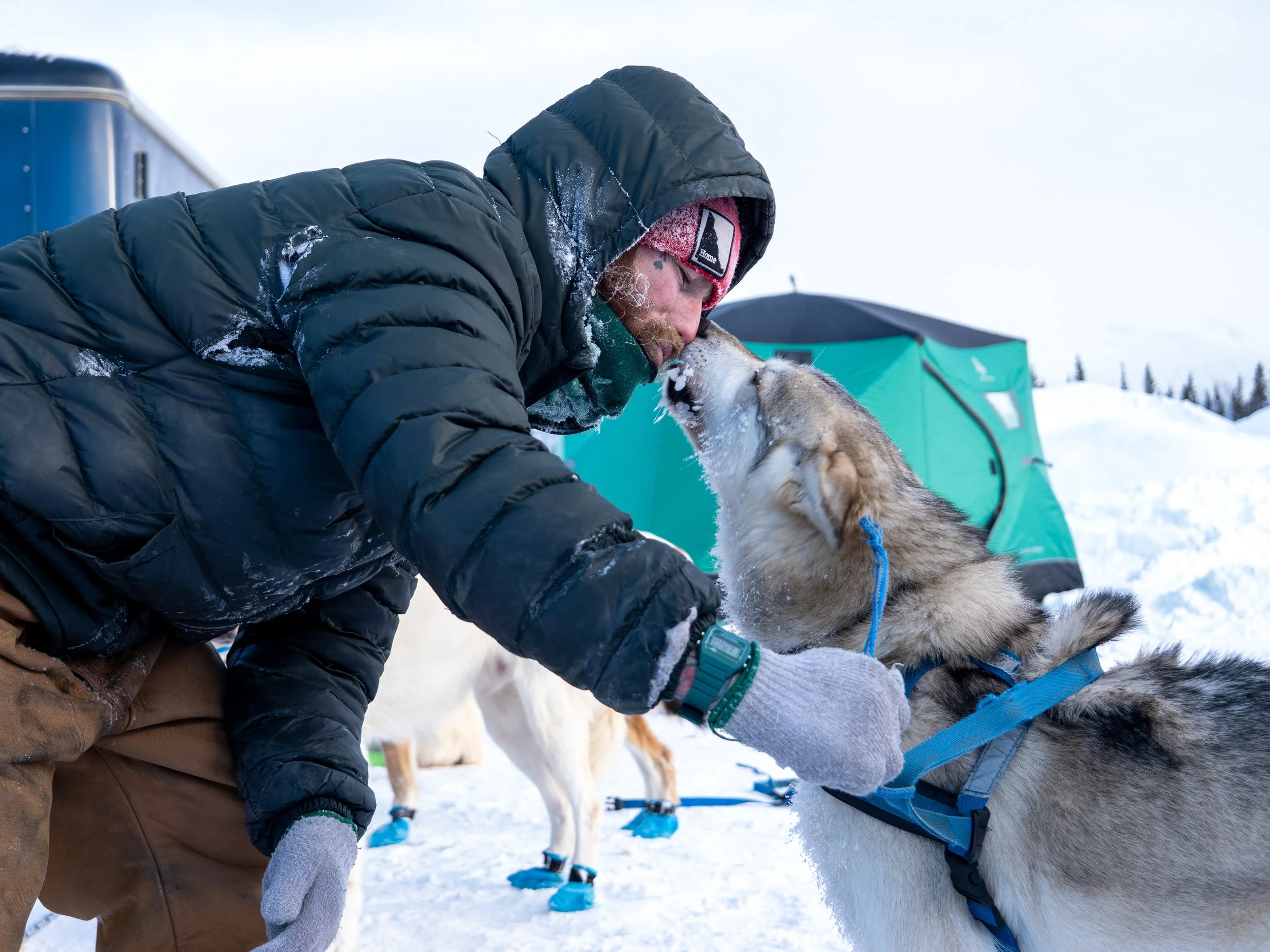
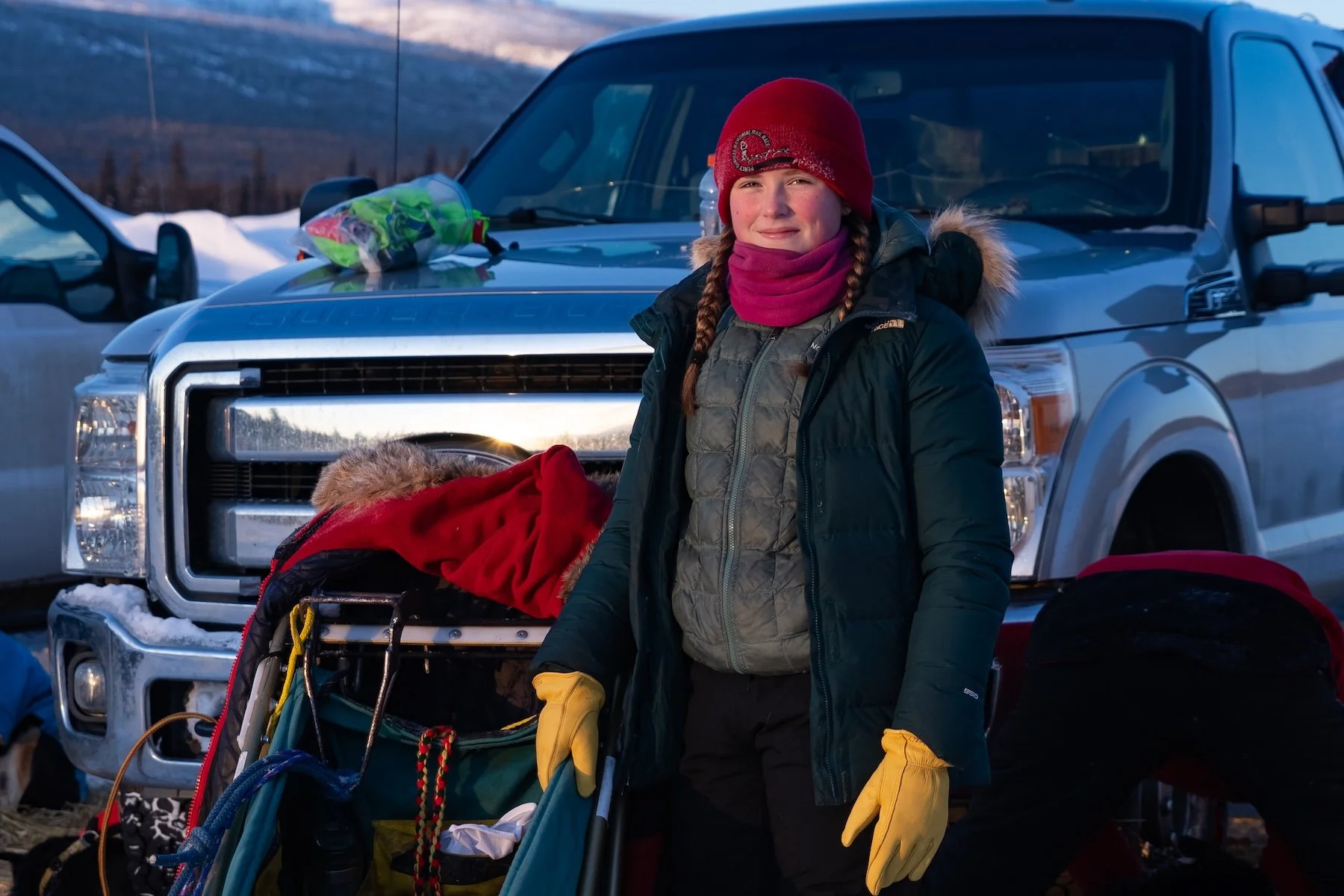
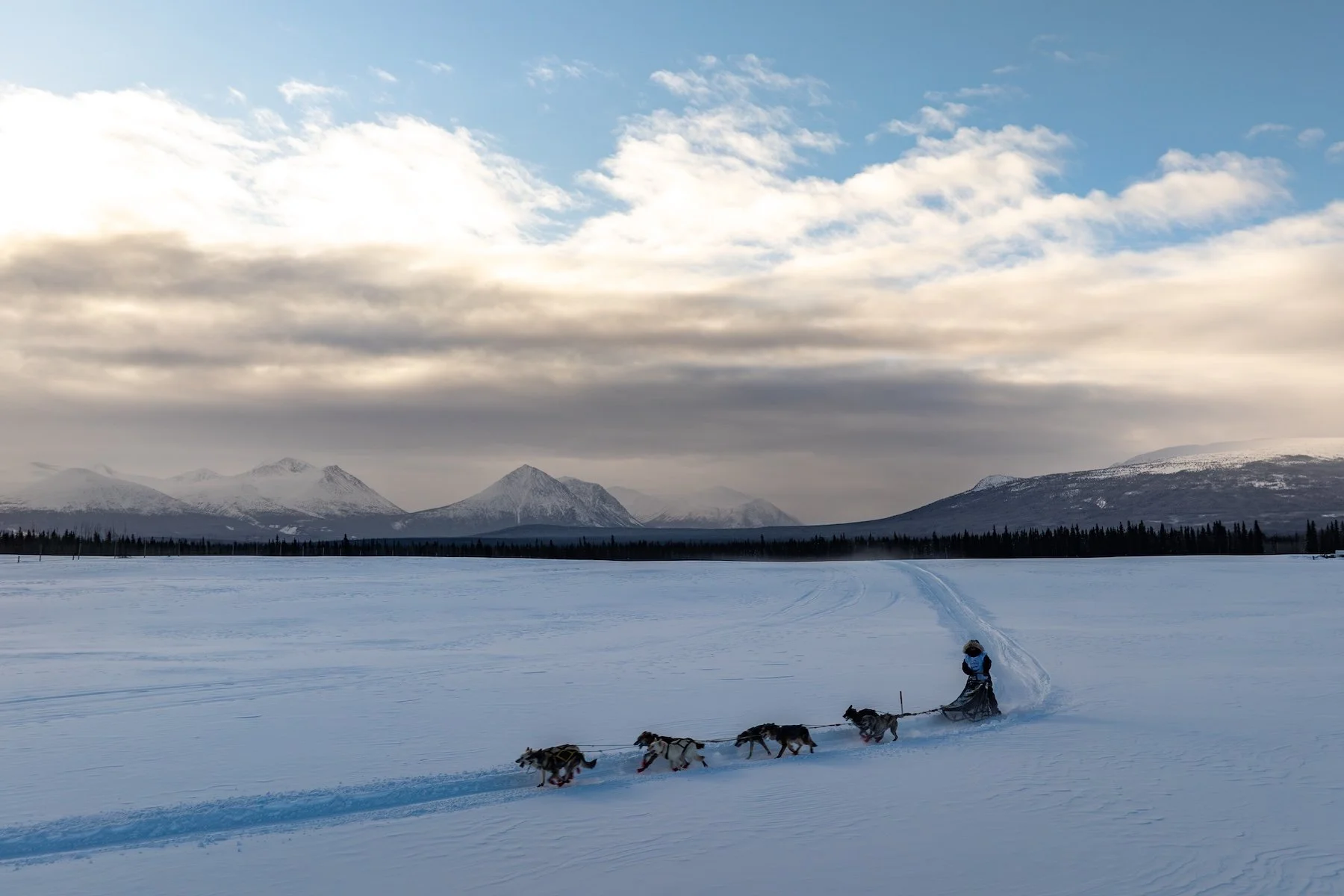
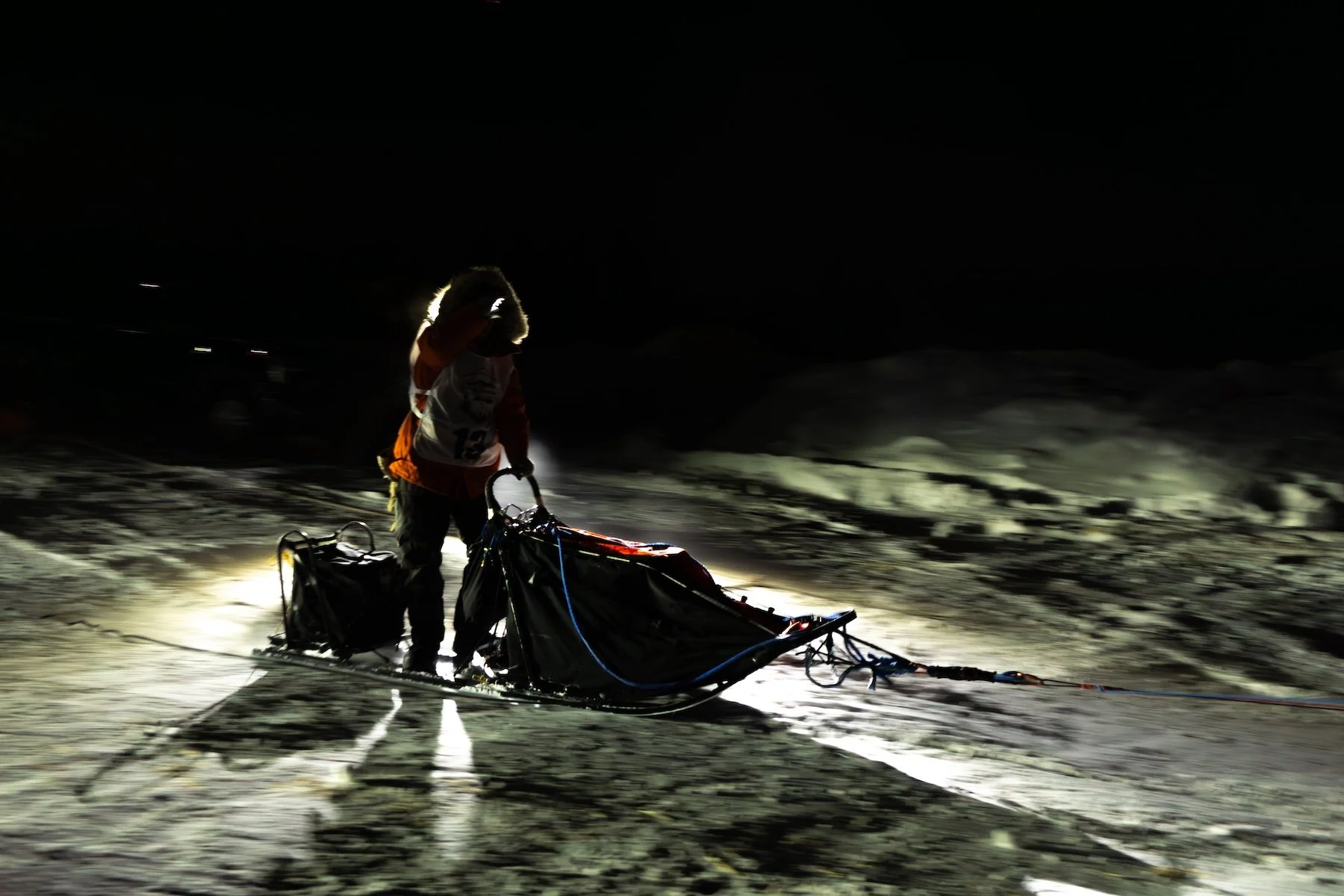
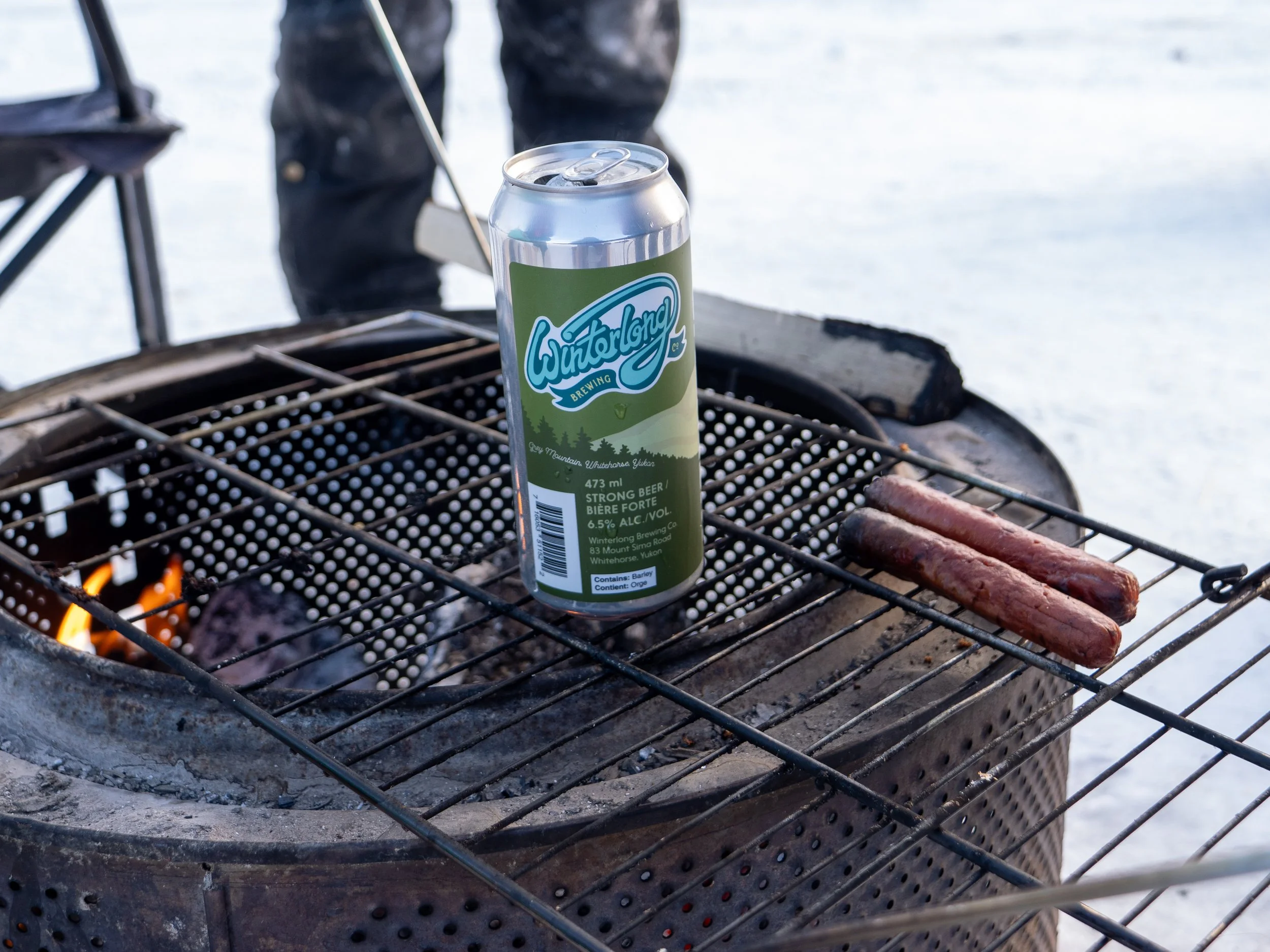
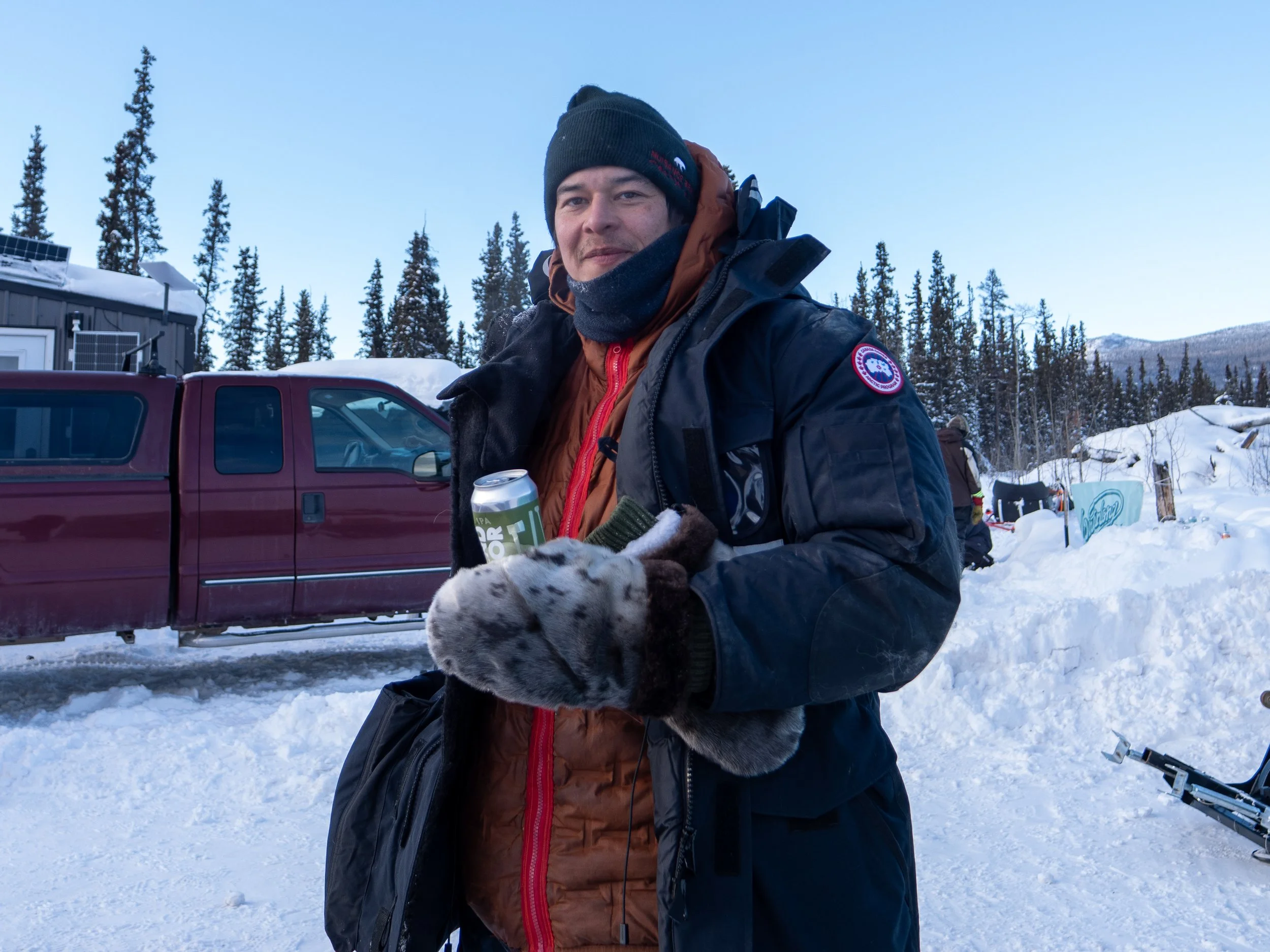
We had an incredible day—a full 12-hours—documenting the race, interviewing mushers, hanging out with the volunteers, thawing frozen cans of Winterlong beer over the fire, eating hot dogs, and visiting. This is what I love about sled dog races, not the competition itself (although it can be really fun to get into) but the social aspects of mushing culture, the coming together for the love of winter, dogs, and wilderness.
It’s what Nathaniel and Louve set out to do with the Yukon Odyssey, bring people together, and offer new mushers the opportunity to gain confidence and experience in a supportive fashion. One of my favourite stories from the race was interviewing the mother-daughter team from Dawson City, Yukon—Kyla Boivin and her 13-year-old daughter, Lyla-Jean. We chatted at 9 o’clock at night, in the cook shack, as they took their mandatory 5-hour rest at the race’s midpoint.
They raved about their favourite trail snack: cheese. Any kind of cheese. But “moon cheese” was best, said Lyla-Jean. “You know, the kind that astronauts eat.” I laughed. Mushers are something like astronauts, aren’t they? Bundled against the elements, travelling through darkness, prepared to take on any challenge thrown their way.
I was in awe of this 13-year-old, who spoke so eloquently to me about her love of dogs. Her mother’s love for her daughter was also evident. Kyla is a seasoned Quest veteran, she’s been running sled dogs for 31 years. The duo hit the trails again at 11:08 PM, one after the other, traveling through the night with their teams, by headlamp.
Read the full story for The Walrus here.
CLIMBING FROZEN WATERFALLS
In late March, I traveled to Banff, Alberta, to meet up with my friend and colleague, Javier Lovera—a talented photographer, filmmaker, and storyteller—to collaborate on a feature story for Canadian Geographic about the effects of climate change on ice climbing in the Rocky Mountains.
Javier is also a climber; he grew up rock climbing in Columbia. When he first moved to Canada in 2006, he loathed the long winters, but through a friend, was introduced into the world of ice climbing. Javier wrote a beautiful essay about ice climbing in The Globe and Mail in late January. “The terrain is, by nature, unstable and dynamic, and only through experience and careful attentiveness to its subtle messages – communicated through the ice’s appearance and how easilyyour tools and crampons sink into it – do you begin to move on it with confidence,” he wrote.
I am not a climber—not at all. Okay, so I climbed the vertical ladder of the 100-foot fire tower. But that’s not the same as climbing a natural feature. Not rock, certainly not ice.
I’ve since learned that climbers call it “ephemeral ice”. Ephemeral means lasting for a very short time, transitory, or fleeting. Originating from Greek for “lasting only a day”, it describes things with brief lifespans, such as insects, flowers, or even ice.
There’s been a long tradition of storytelling about glaciers. But before being invited into this story, I’d never really paid much attention to ephemeral ice. Ice that forms from frozen waterfalls, or groundwater seeping through the cracks of rock. This is what ice climbers are looking for and they have dozens of ways to describe the constantly shifting dynamics of the ice. Hero ice, plastic ice, shower curtain ice, sunbaked ice, rotten ice, sandwich ice…
Barry Blanchard, one of Canada’s legendary alpinists and authors, told us that ice climbers have as many words for ice as the Inuvialuit do for snow. Blanchard, who was recently appointed to the Order of Canada, has had a lifelong love for climbing snow, ice, and rock. Over the past 40 years, he’s witnessed many changes in the Rockies—and he told us stories about the ways in which climbers and guides are adapting to the new extremes.
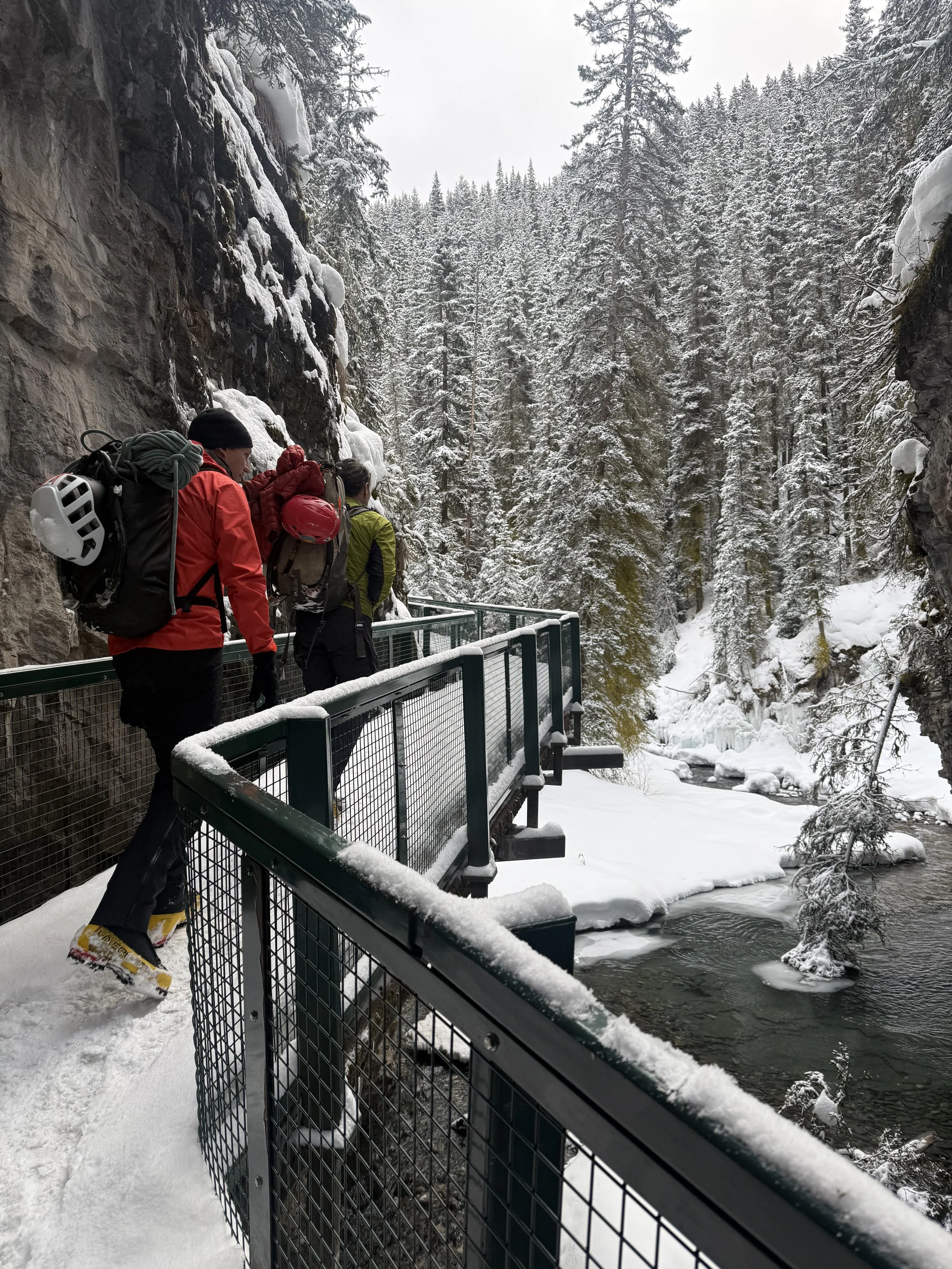
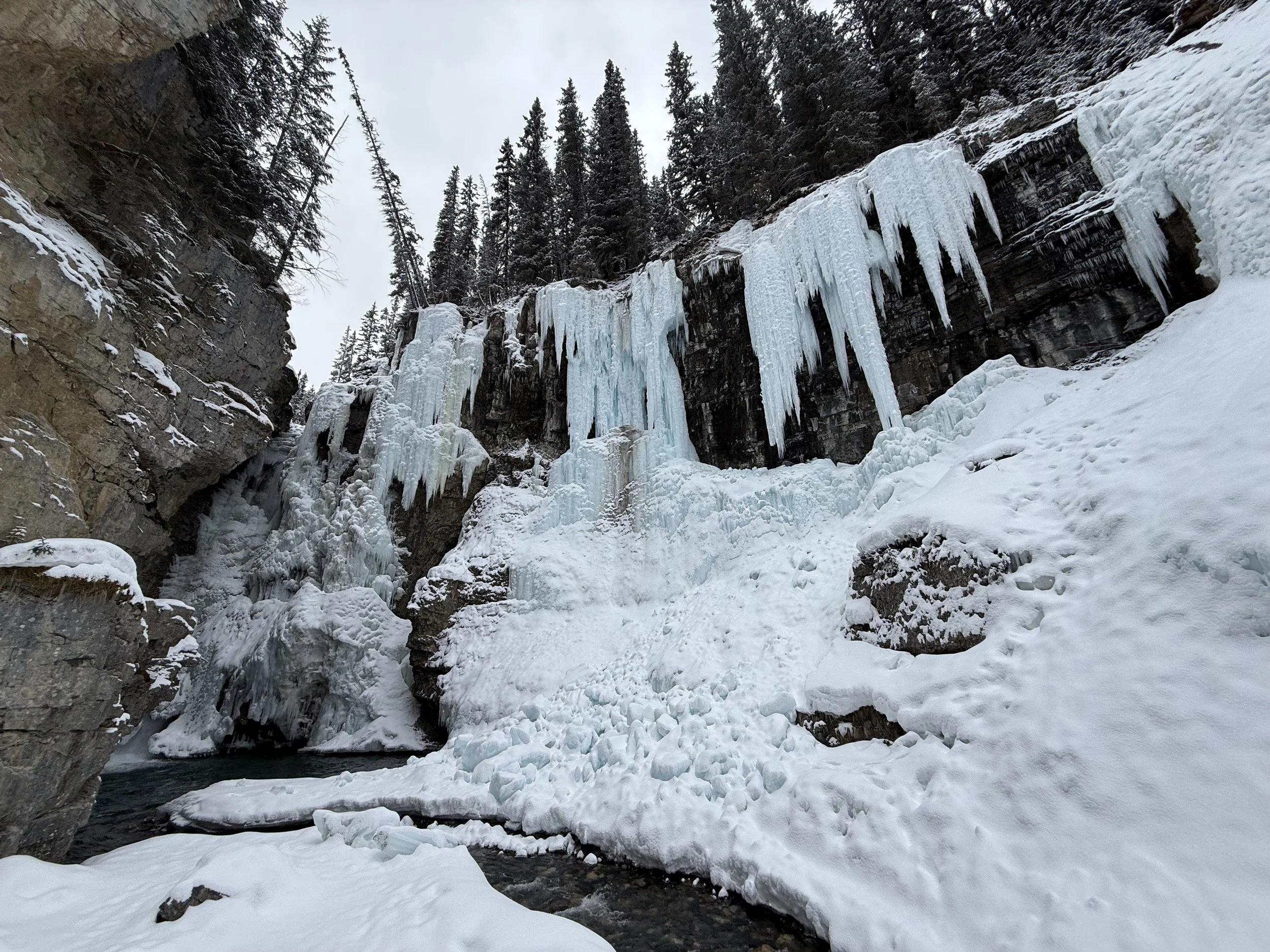
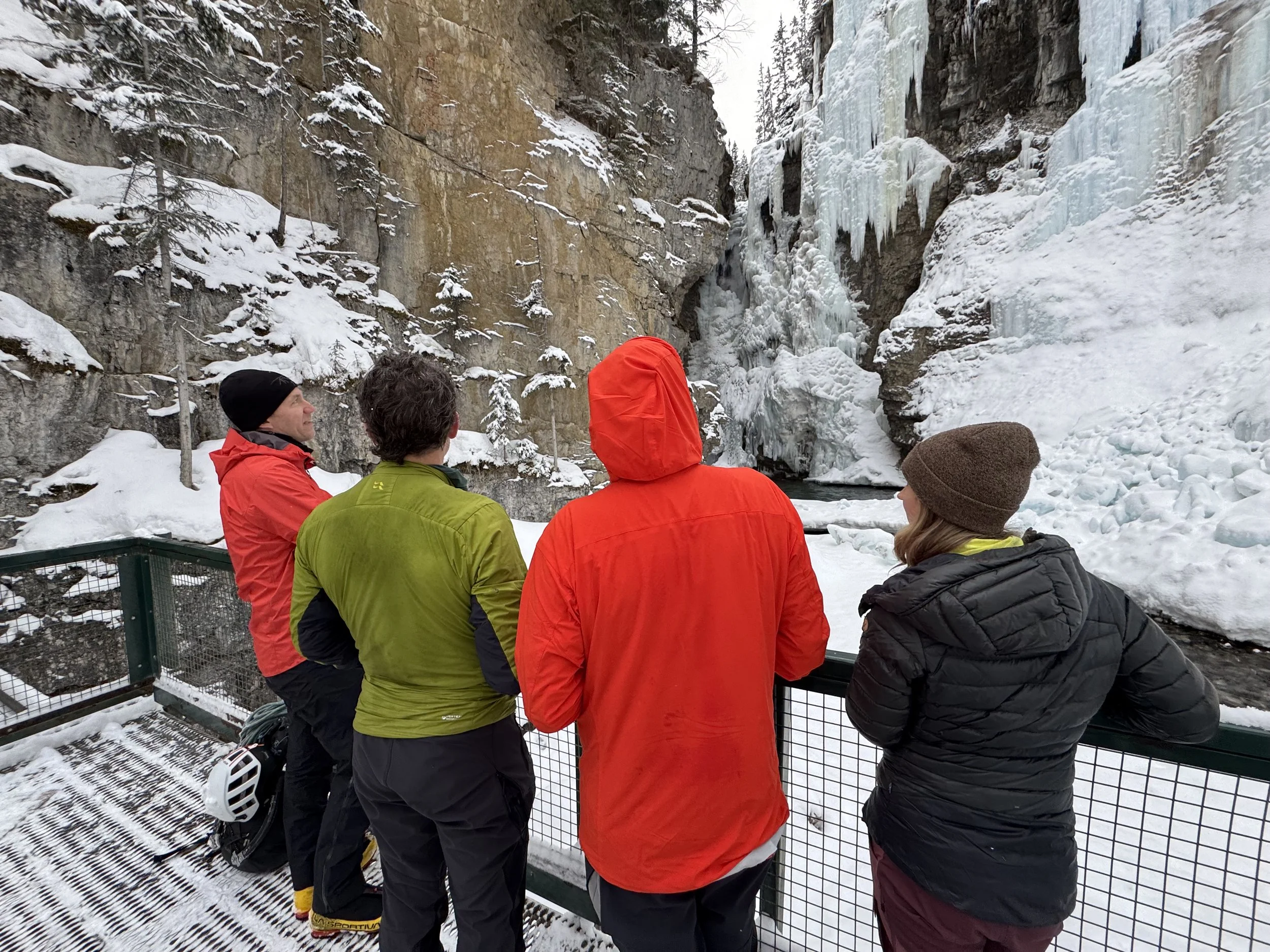
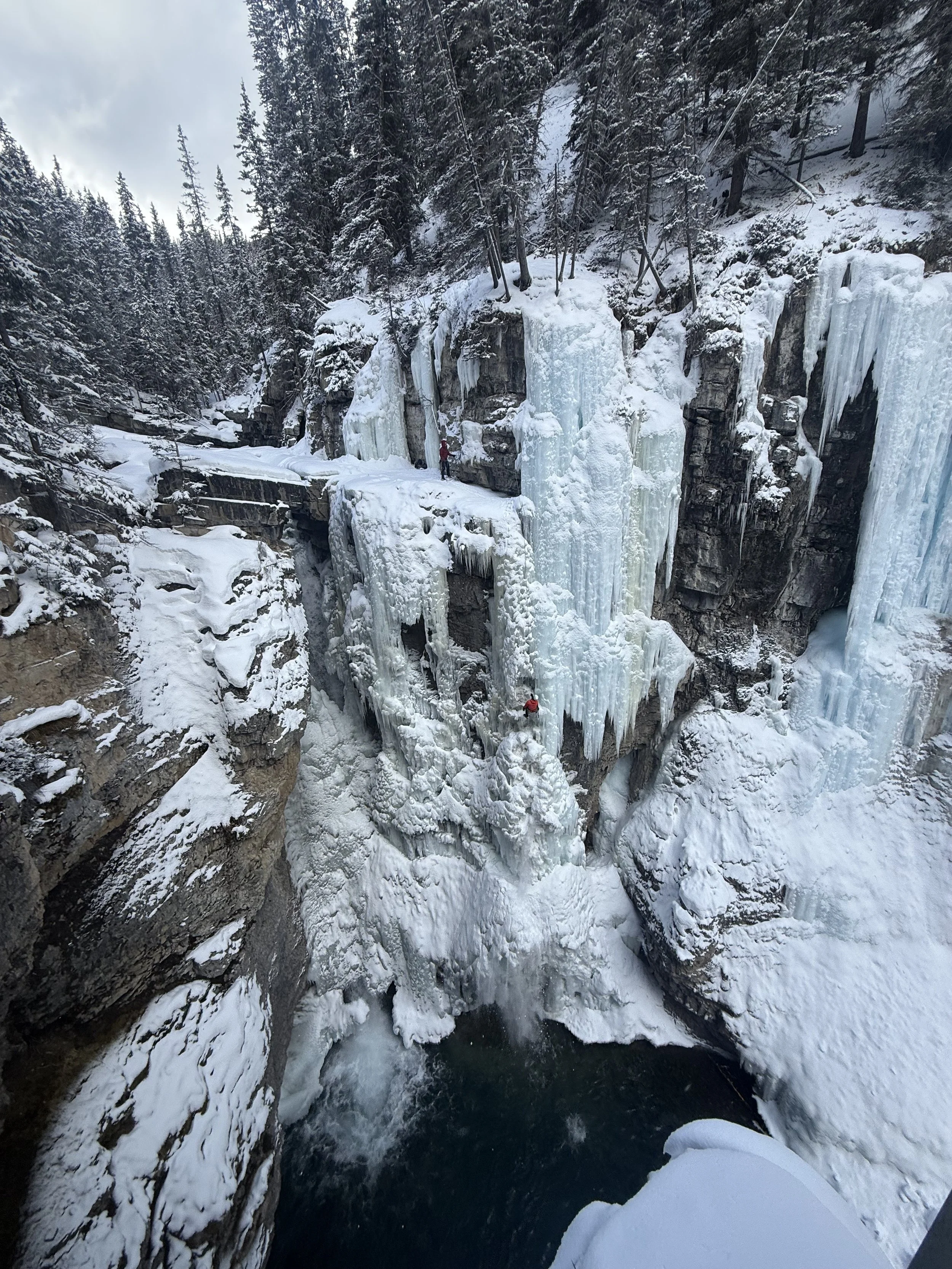
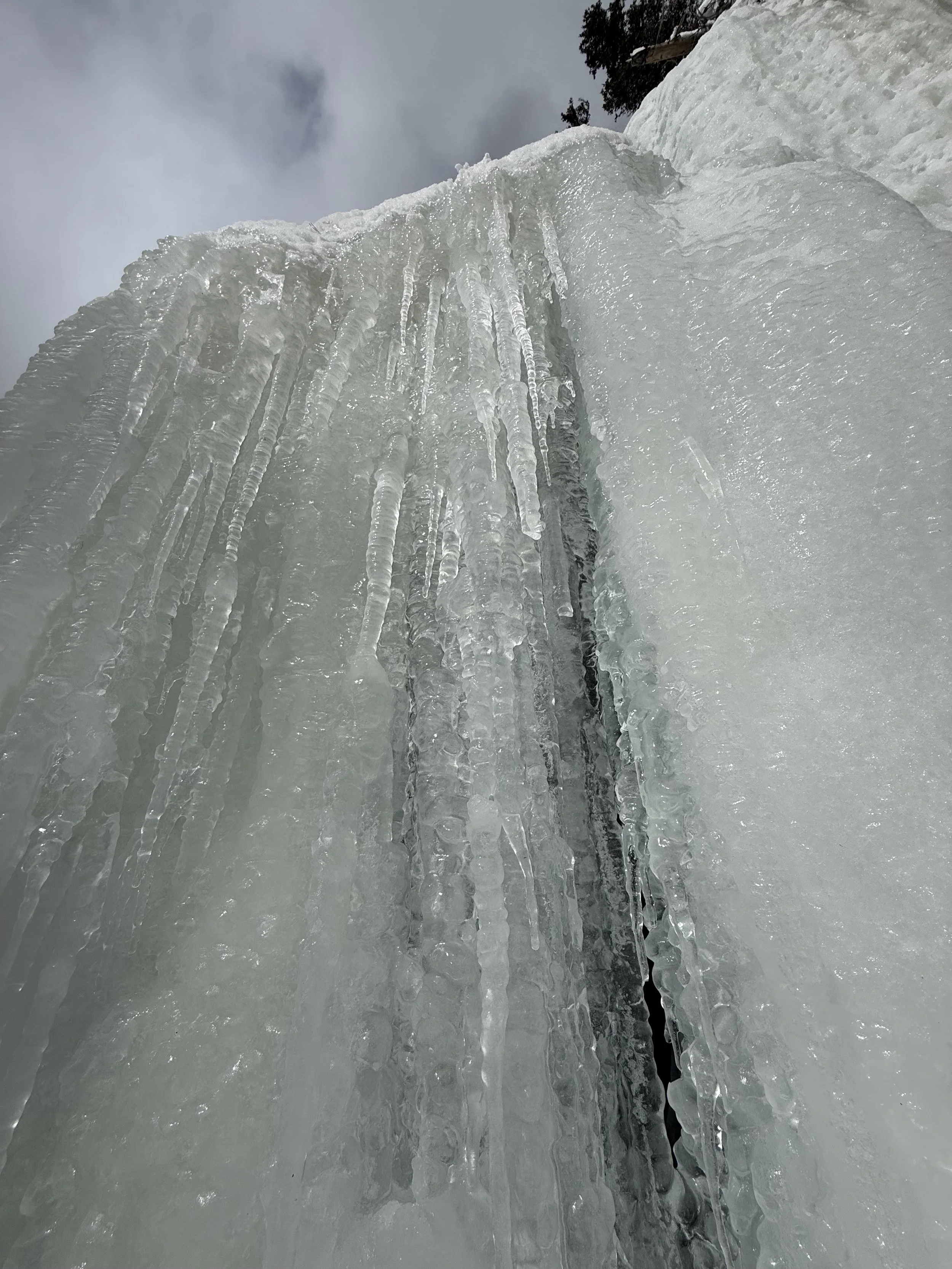
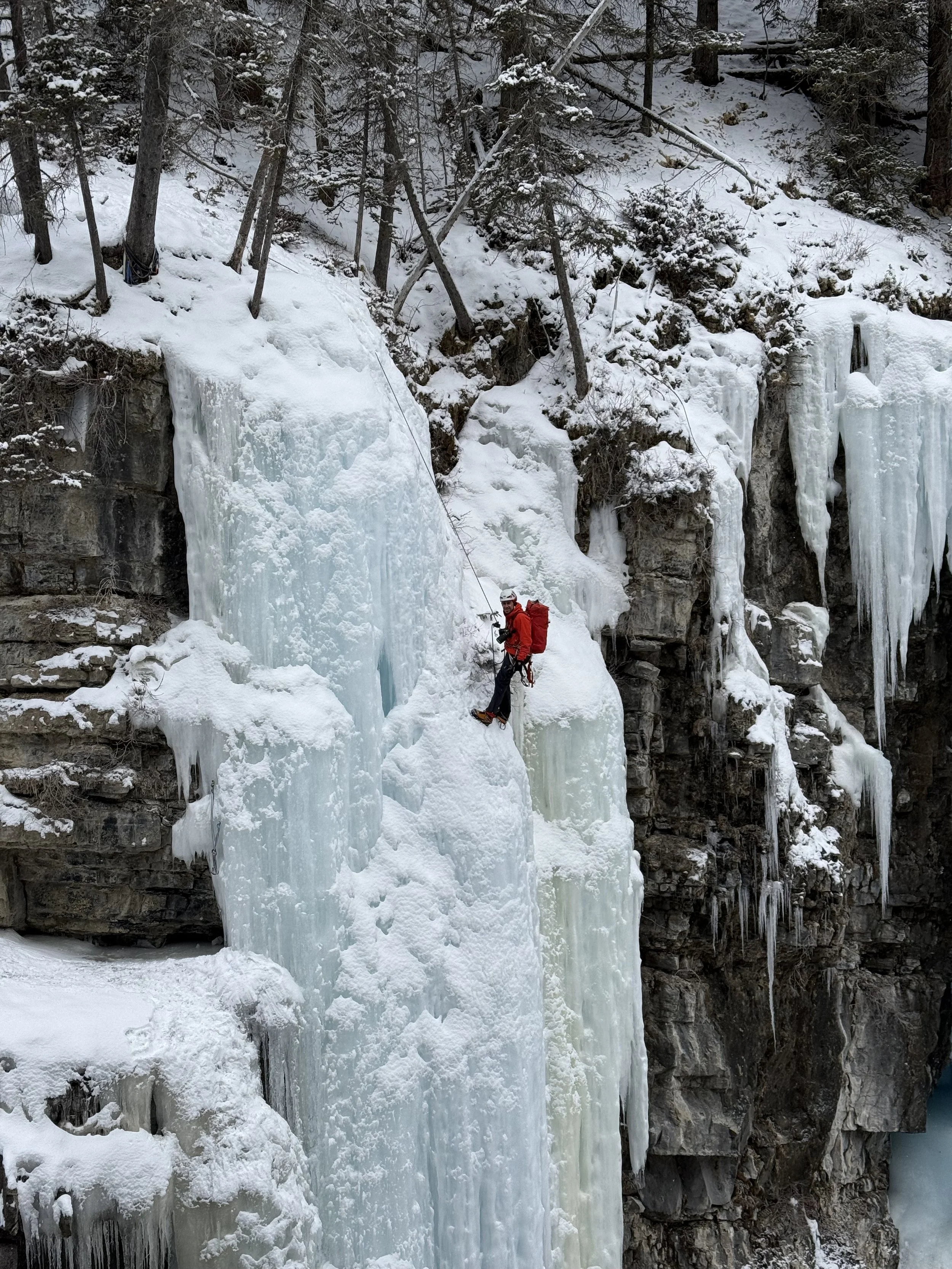
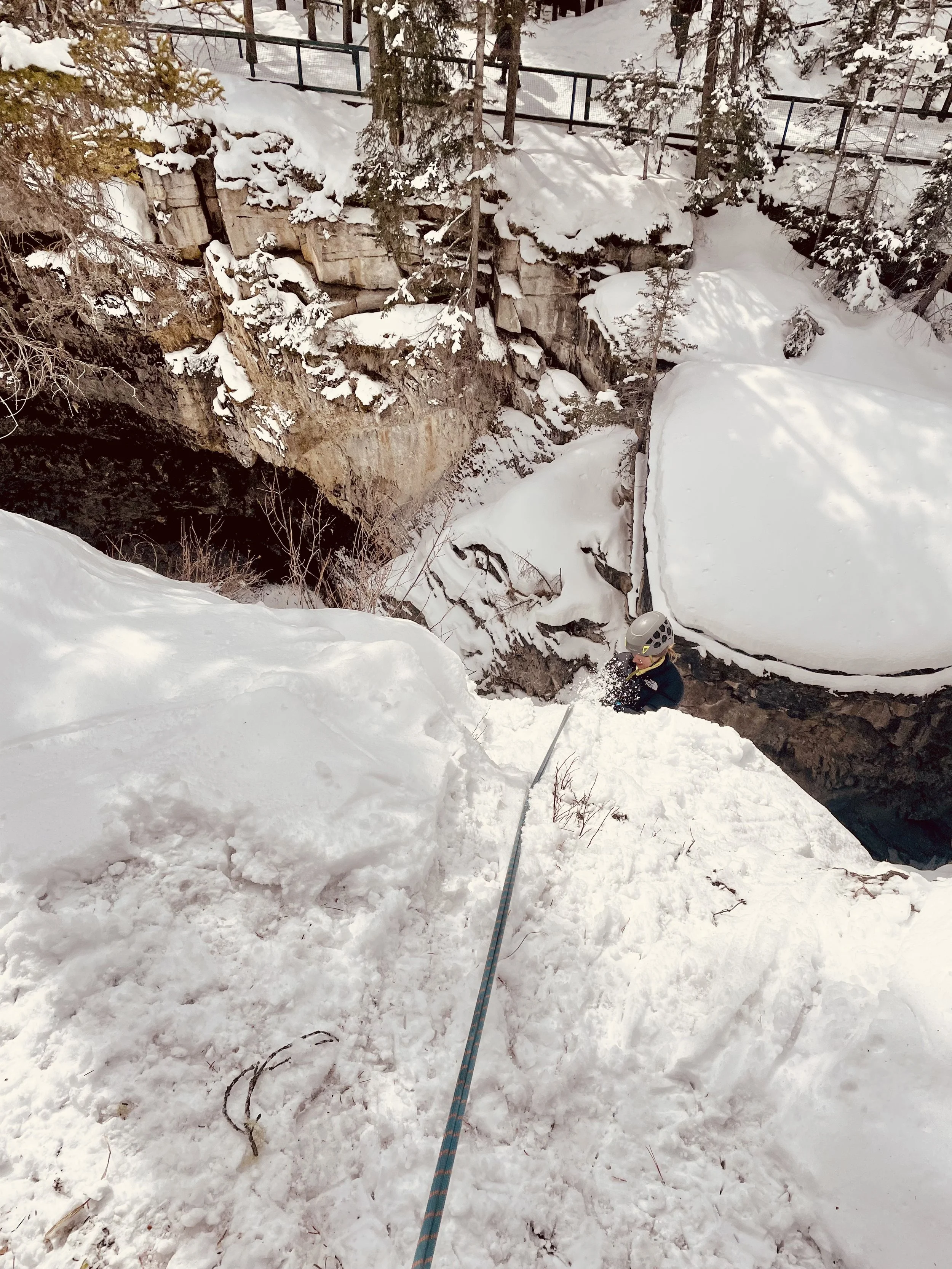
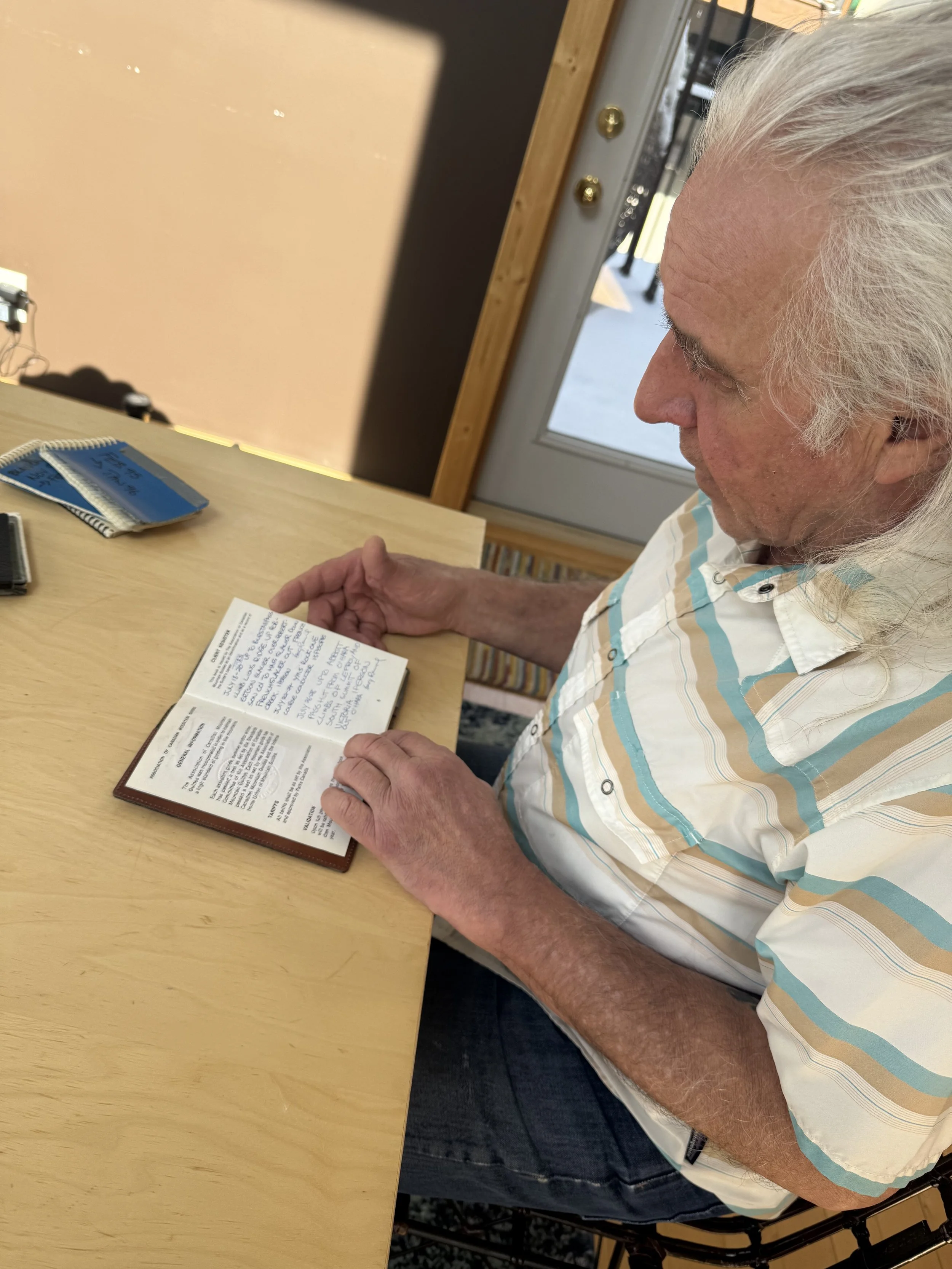
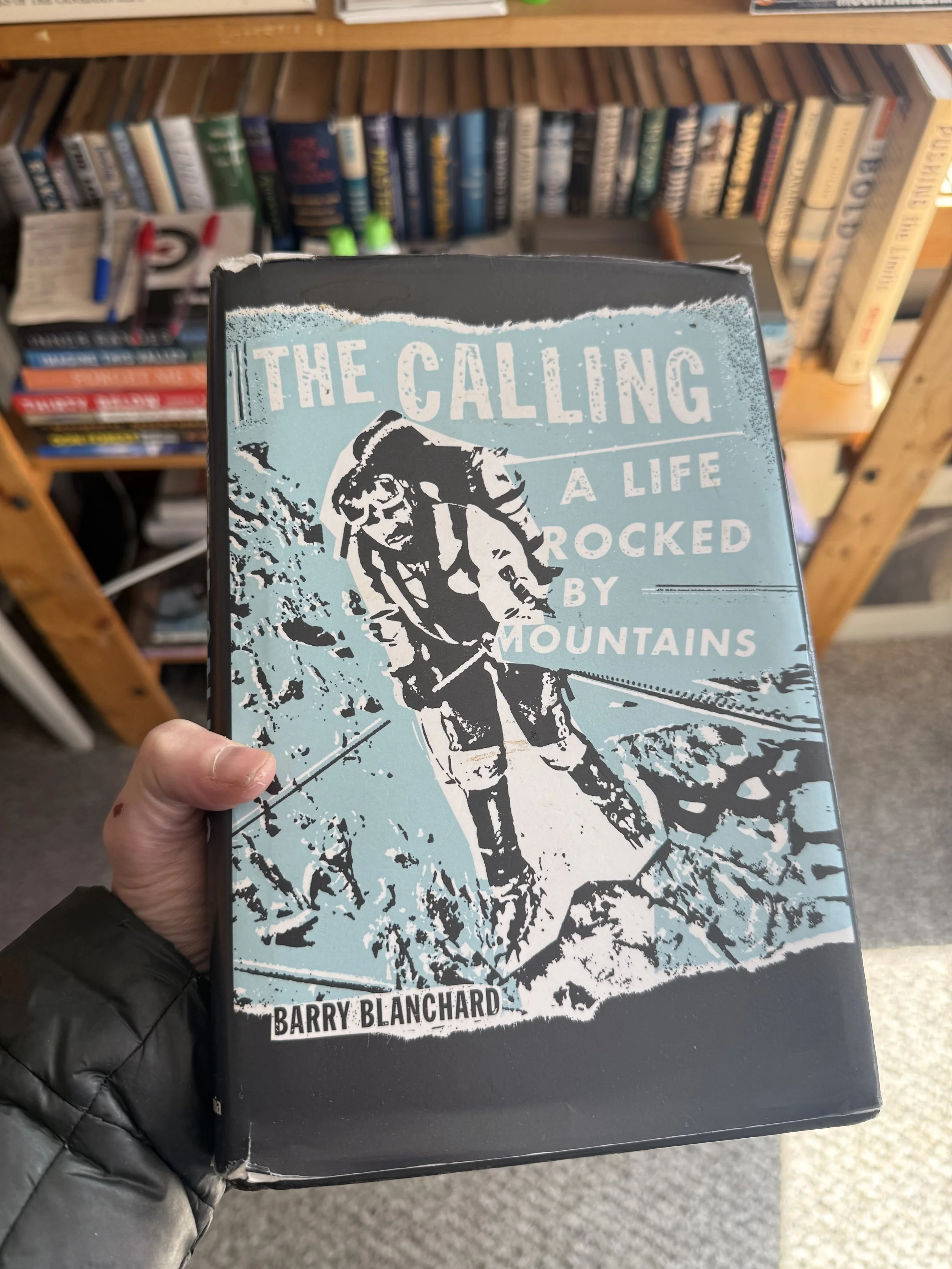
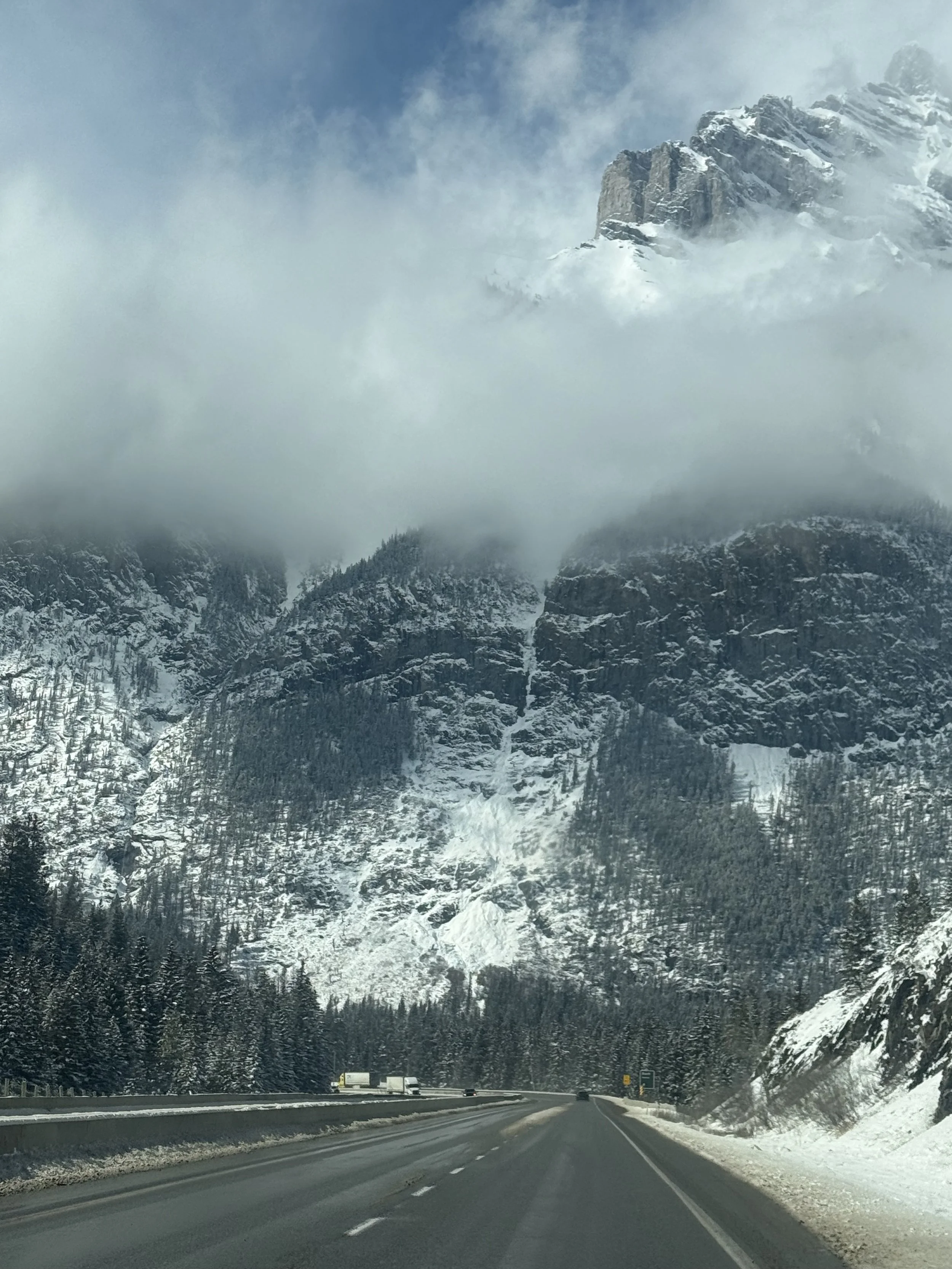
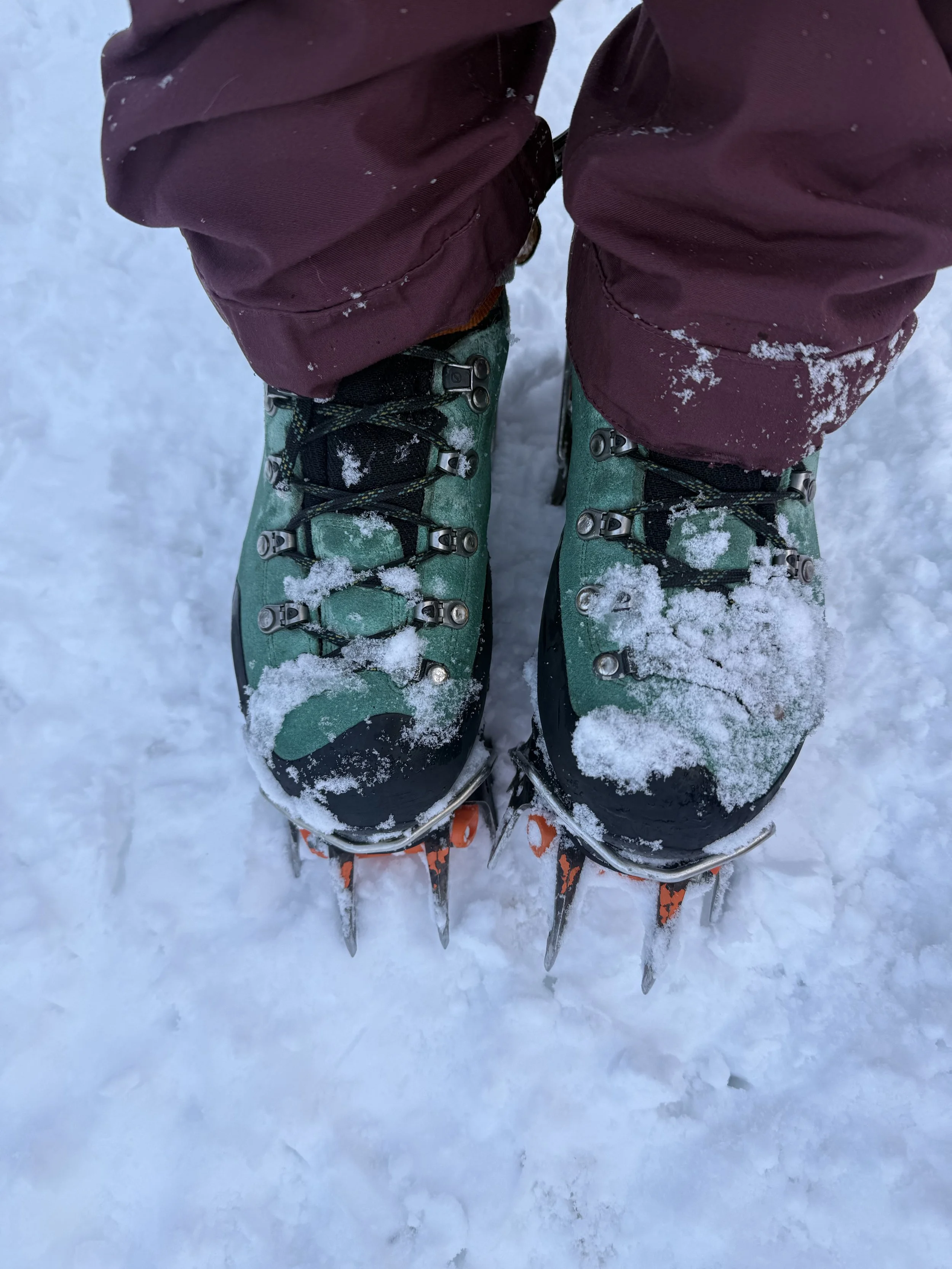
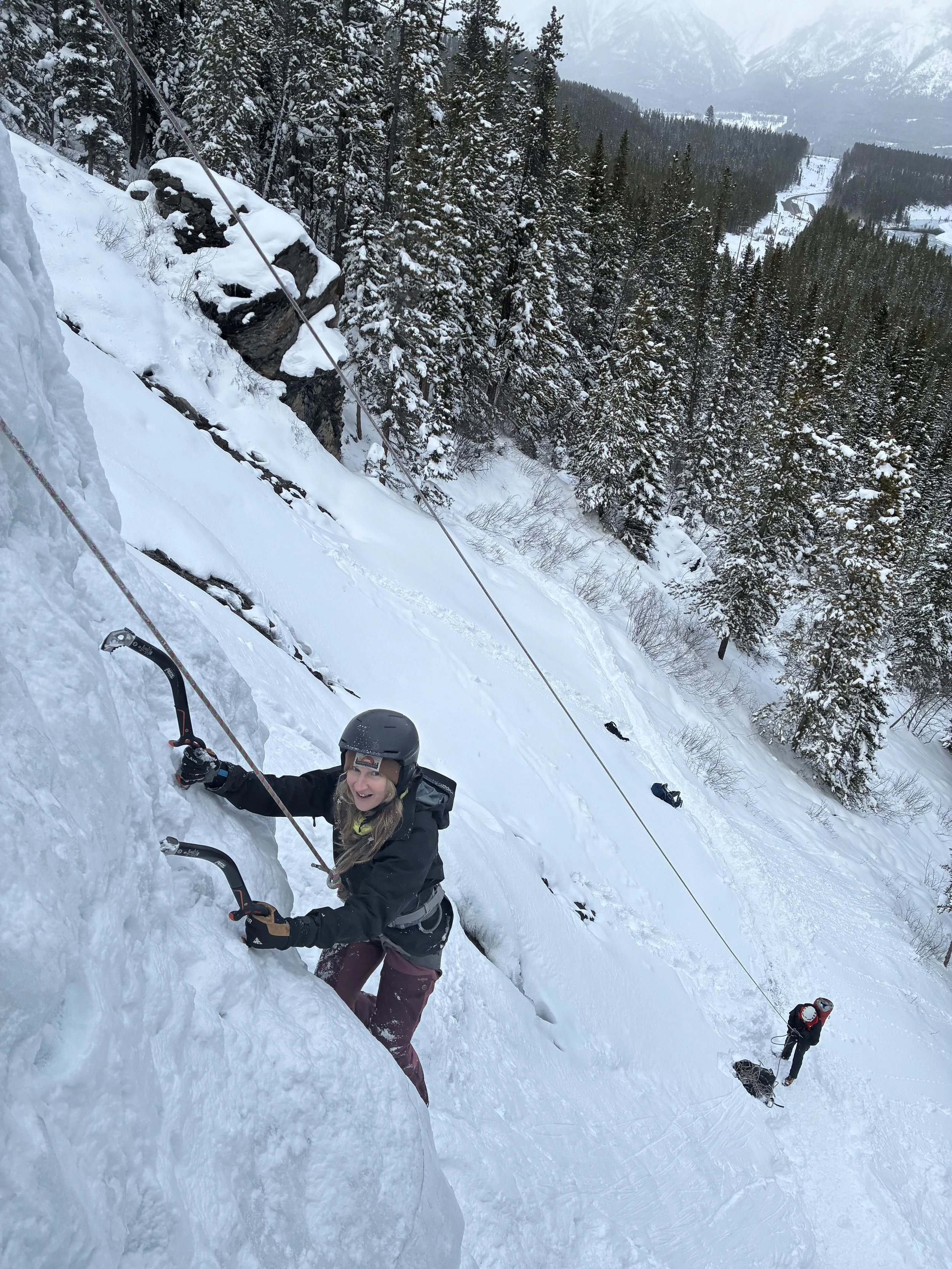
I must admit, I was entirely enchanted with this story and being ushered into the world of ephemeral ice. Alpinist and guide, Ian Welsted, who spent the day with us at Johnston Canyon, told me that he looks at ice the same way a paddler would read the conditions of a fast-flowing river. The ice is a map he knows how to decipher.
On that day, I didn’t expect to actually climb myself. This story isn’t about me. And yet, somehow I found myself flailing like “Bambi on vertical ice”, following Ian and scientist and climber, Graham McDowell, up onto a cliff.
“Trina, how are you with heights?” Ian asked casually and it suddenly dawned on me that I’d have to rappel back down from where we started. I tried to play it cool. I knew I was in the most experienced hands. Ian had made a first ascent of K6’s West Face, for crying out loud. He’s one of the most accomplished climbers in Canada. But I’d be lying if I said I didn’t feel terror, backing up in my wolverine-like crampons, and voluntarily hanging my ass over a sharp overhang of ice. I was so nervous that I was unknowingly strangling, or death gripping the rope. In climbing lingo, “gripped” refers to a state of adrenalin-powered panic.
My feet finally found the earth and I turned, shakily towards Ian, who greeted me with a big grin. “Kinda like coming face-to-face with a black bear, hey?” Indeed, I felt every bit as ALIVE as I’ve felt in the presence of bears.
This story surprised me in all of the best ways. Thank you to Ian, Graham, and Barry for sharing with us. I’m grateful to Javier for inviting me into this beautiful story, and to his crew, Juan and Andrew, for their support. I can’t wait to dive into the writing…Stay tuned for this feature which will be published in Canadian Geographic in 2027.
In other news, I’m heading to Canada’s west coast in early May to promote Black Bear:
MAY 7 - VANCOUVER. B.C. - 7 PM
Join myself and journalist, Ainslie Cruickshank, at the Vancouver Public Library for a conversation on human-bear coexistence, journalism, and more—Register here.
MAY 9 - POWELL RIVER, B.C.
Join myself and author Jenna Butler for a special event at the Blueberry Commons…more info soon!