Confronting the Bear
WHY I CHOSE TO WRITE A BOOK ABOUT BEARS
“Why bears?” my friend, an acclaimed journalist, asked me several months back. It was a casual enough question—we were having dinner and catching up at a restaurant in Whitehorse—but even so, it caught me off guard.
Leave it to a journalist to get to the point, already.
I can’t remember what I told my friend on that day only that I answered the question rather poorly, probably stammering out something like, ‘oh, well, they’re just so fascinating’, and then the embarrassment of my unserious response to my very-serious-journalist-friend followed me around for days after. Why would I dedicate six years researching and writing a book about bears when there were so many other, arguably more important, stories to tell? I felt like a thirteen-year-old who’d chosen to write a grade-five science report about black bears, simply, because she loves bears. That somehow didn’t feel like enough.
I’ve never been particularly good at elevator pitches for the books I’m working on. Maybe that’s, in part, because the process of writing a book is typically spread out over many years, and inevitably, the writer’s relationship to the “why” of the book evolves over time. But it’s also because I’m never entirely certain. Writing is a slippery business. Like trying to hold a live fish in your hands. You think the story is about one thing and then, over time, it becomes quite another. You look down and the fish, the original idea, is long gone.
Why did I choose to write about bears in 2019?
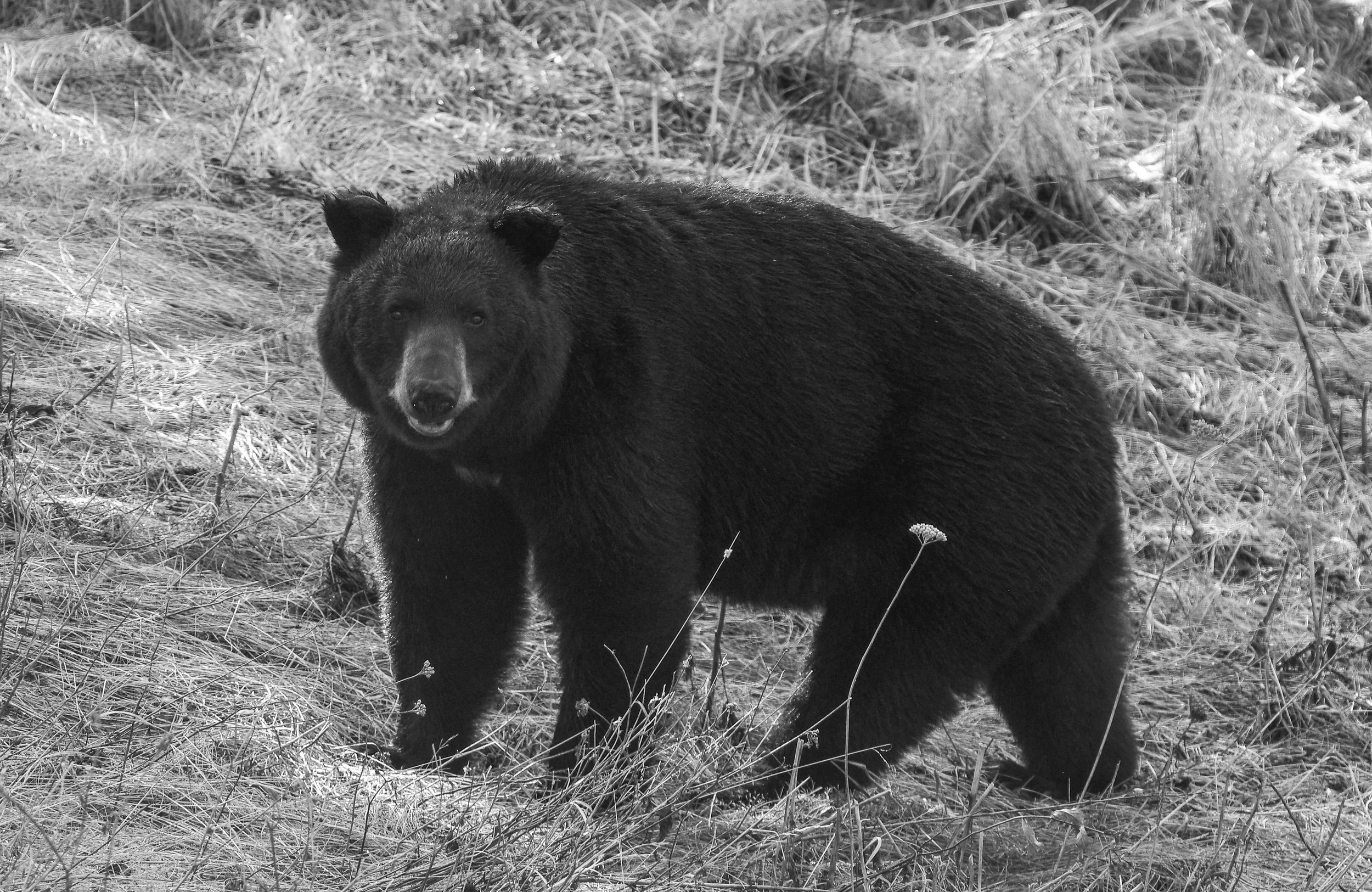
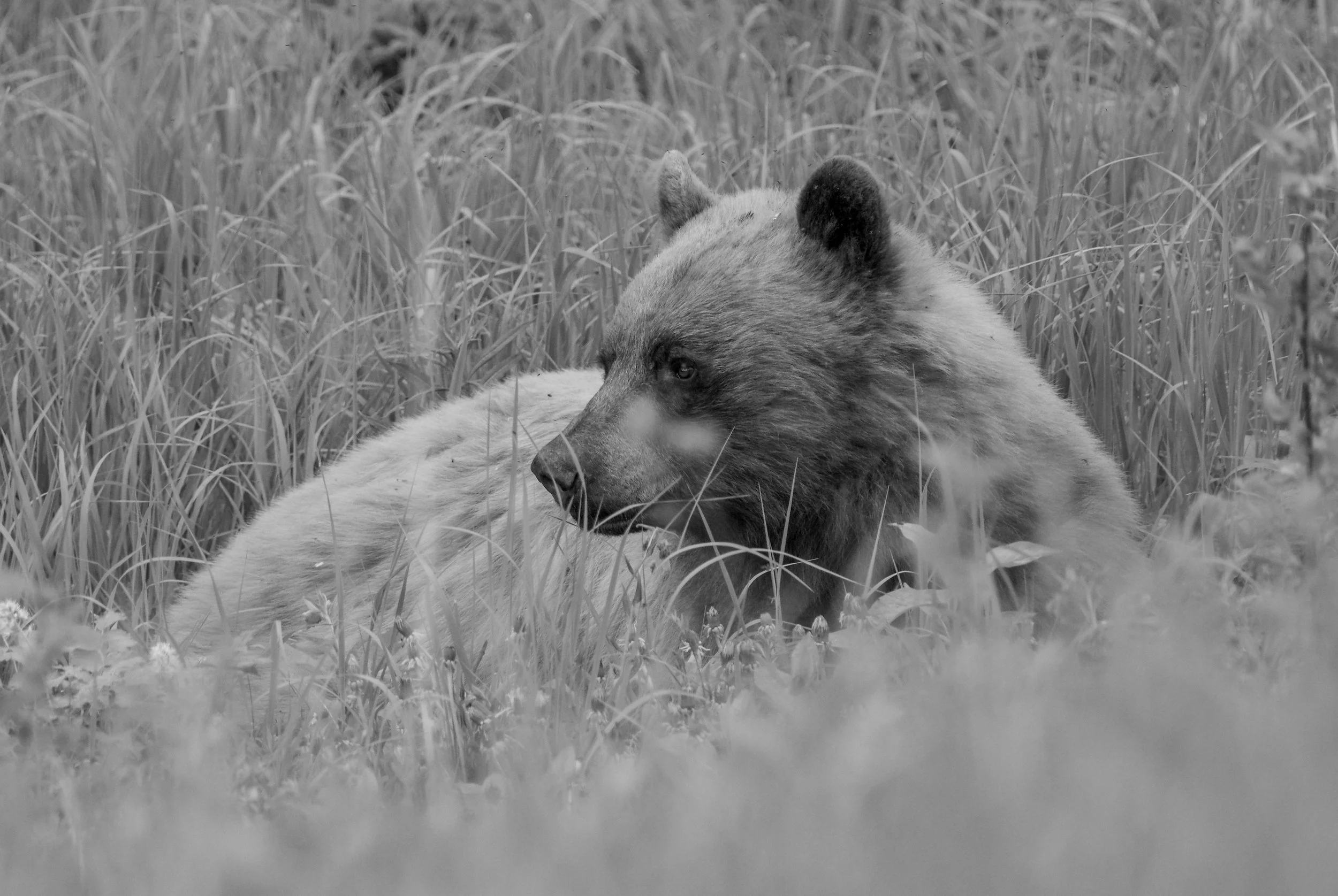
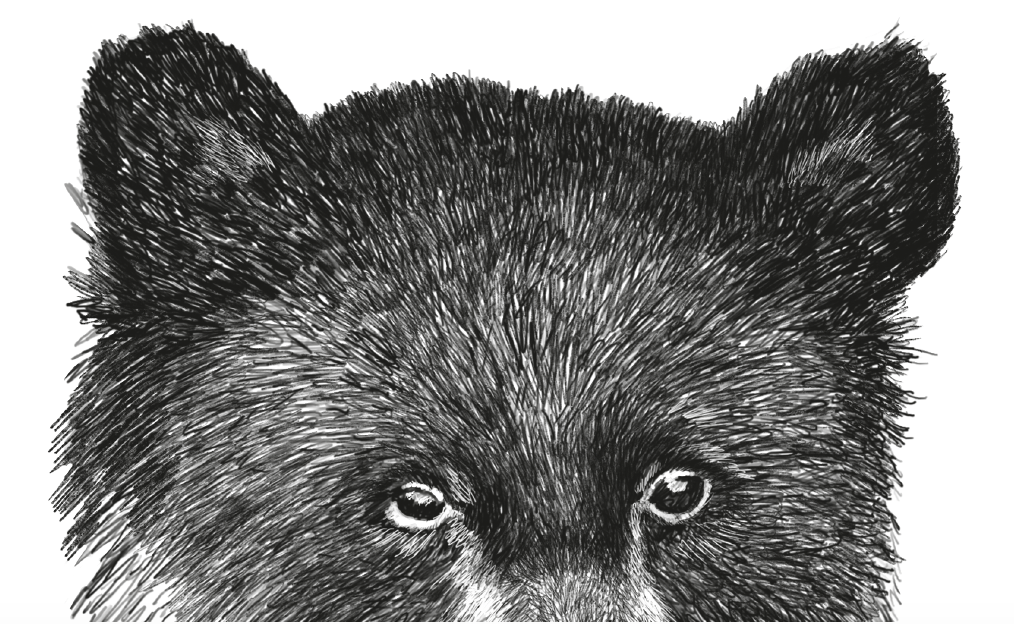
They were RIGHT THERE FOR GOD’S SAKE. Standing RIGHT THERE, metres away from me, wearing their winter robes of dull black, matted fur, lip-smack snacking on a buffet of dandelions, and they did not run away when I shouted at them to GO AWAY, BEAR! The bears were not afraid of me, as I’d been taught by the generic handbook of what to do when you encounter one.
The forest was seemingly crawling with them that summer. They dominated my thoughts. I could not look away. They began to take up space on the page, first, as bits of prose and poetry. I rearranged the words I wrote about them again and again until it dawned on me, maybe I was writing a book about them.
A large male bear, one with the legs of a basketball player, charged me that first summer and I thought: I am going to die. And then, after several agonizing seconds, waiting shakily with a canister of bear spray in hand, the leggy bear veered off the trail, stood up, paws dangling like the boughs of an apple tree, and I realized: maybe the big guy was just trying to get a better look. Days later, I witnessed a large mother bear nursing her cubs, only metres away, so close that I could hear the cubs purring. I saw her swollen teats, sensed her fatigue and exasperation. She looked so damn human, like any female friend I’d known who’d been ready to wean their kids off their milk. My mind went wild, thinking, did I even have a choice in the matter?
The bears ambled in and took over the plot.
Today, my understanding of the book has, inevitably, deepened, as the narrative was shaped over the years. Why did I want to write about bears? Maybe because it’s easier to write about our relationship to bears—and the big emotions they provoke in us—fear, awe, revelation, hate—than it is to confront our own human relationships, far more fraught with risk, harm, and pain. Writing about the bears helped me get closer to the truth of my relationship with my brother—and with myself.
If there’s a truer story to tell about bears it’s the way in which they’ve so generously tolerated us, adapted to our ways on the landscape, and figured out how to survive—despite us.
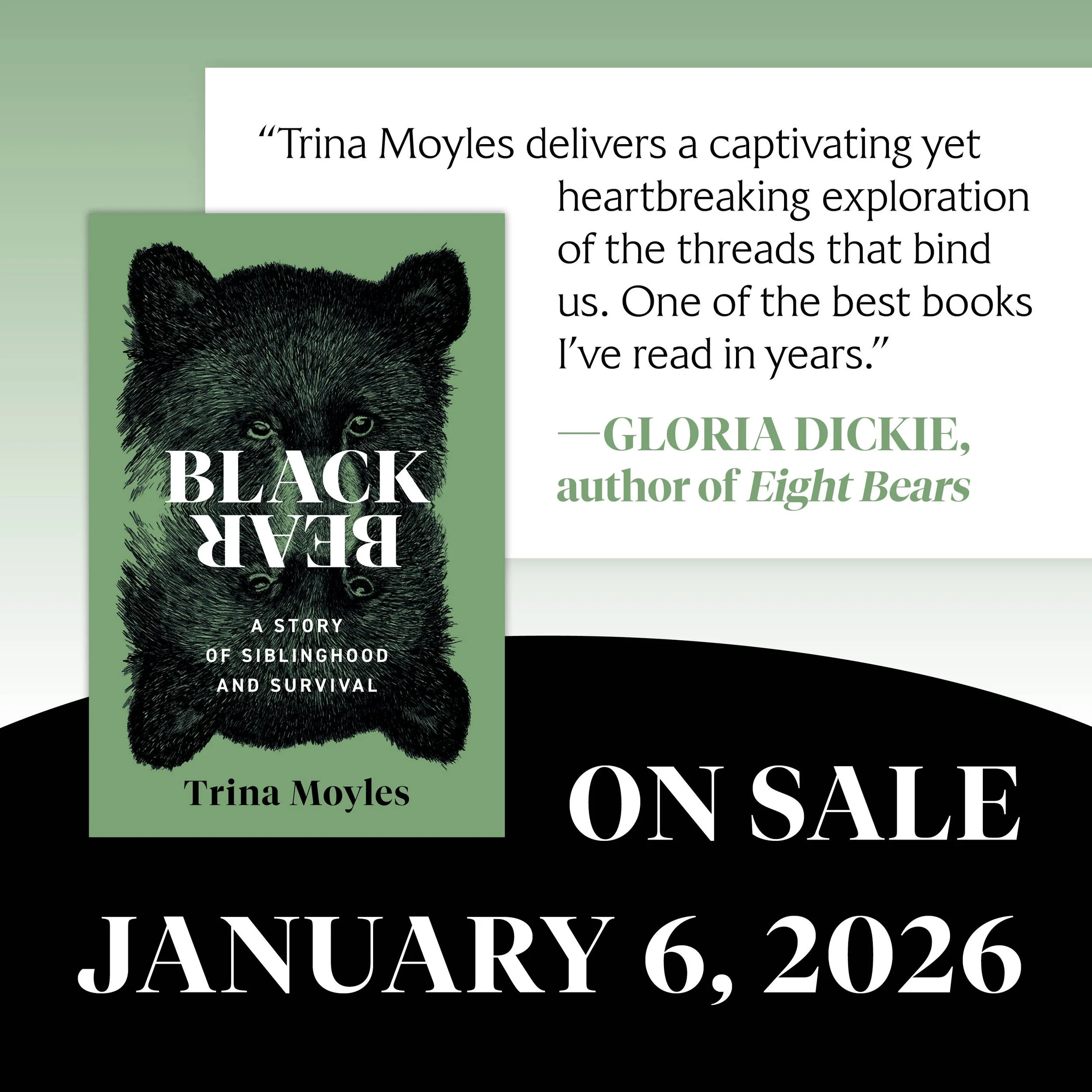
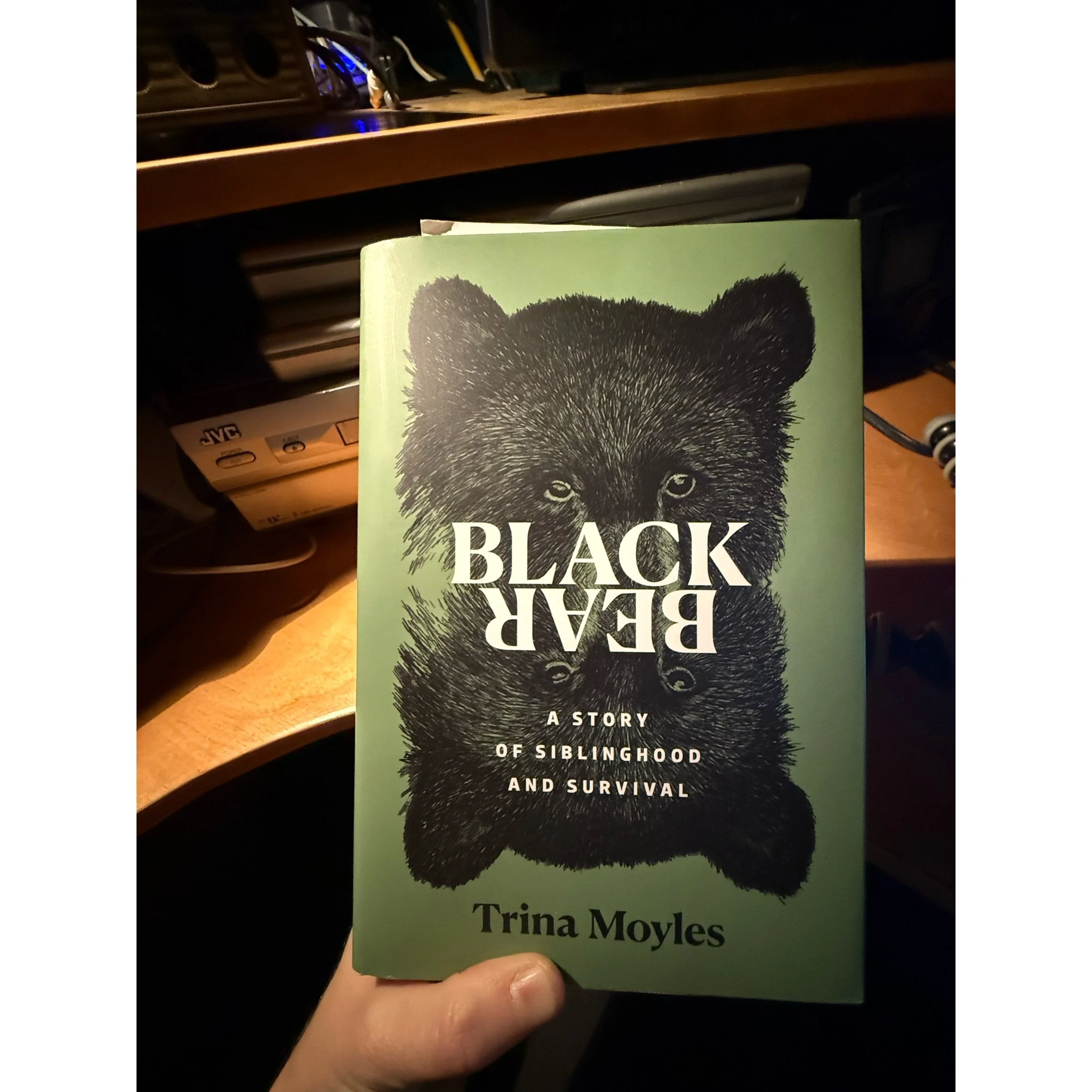
On January 6, Black Bear: A Story of Siblinghood and Survival will be born into the world and then you can read the book and tell me what you think it’s about. That’s part of the process, too, inviting the reader into the story and making sense of it together.
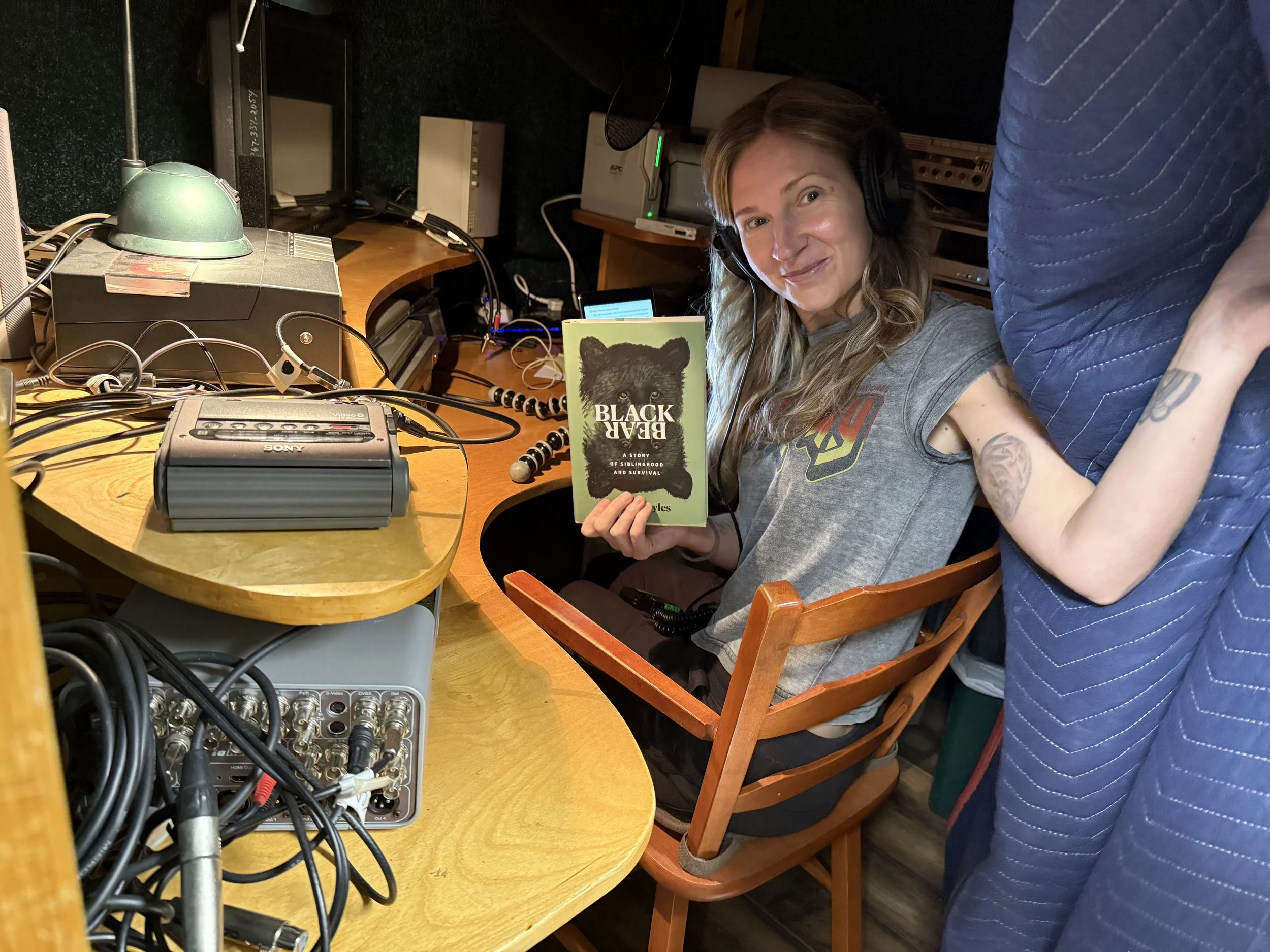
Last week, we wrapped up the recording of the audiobook in Whitehorse. “We” being an all-star team featuring producer, Sonia Vaillant, director, Rebecca Ballarin, my partner, Michael Code, who recorded and annotated the many, many audio takes—and myself as the narrator.
Mike built a very quirky “bear den” in his family’s basement studio, downtown Whitehorse, under a bunk bed, insulated with the kind of blankets and sleeping bags that you’d want at -40 C. When I was “tucked in” for the recording session, it felt as though I was alone in a warm, dark burrow. A tiny reading lamp provided some light and I narrated from the bright white glow of an i-pad screen.
From Ontario, Rebecca’s voice reached me through a headset. She listened to every word and snagged the slightest stutter, or stumble, or sputter, and many, many mispronunciations. Lemme tell ya, narrating your own audiobook is one way to discover you’ve been saying a benign word— take decal, for example—wrong for your entire life. (It’s DEE-kal, people!) It’s also a way to discover that you write more for the page and less for the ear. “WHO WROTE THIS SENTENCE?” I’d often rant. Next book, I’m ditching those long meandering sentences that are practically impossible to narrate. “Use your commas,” Rebecca would say. They became little life rafts which I could momentarily cling to, coming up for air, as I dove back in.
And then there were the tongue twisting, tongue tripping words like: crepuscular, staggeringly, serum testosterone and cunnilingus (bear lit aficionados will know what the latter is in reference to! IF YOU KNOW YOU KNOW). There were other beautiful languages to wrap my tongue around, too, like Kwakwala, which my friend and bear guide, Sherry Moon, of the Musgamakw Dzawada’enuxw First Nation was kind enough to send voice memos for.
Then, of course, there was the story of my brother, which confronted me on the page as I read aloud the words. Wherever he showed up on the page, I did my best to convey love, care, and compassion. There are sections of the book that remain as painful as the day I encountered them. I didn’t want anyone else to read these words. I didn’t want anyone else to try to voice the words and experiences shared between us.
I was grateful for that warm, dark space in which I could say them aloud and for the knowing that my partner, Mike was right there, in the other room. Rebecca made me feel so comfortable, creating space for the inevitable emotion that would come rushing and break the flow of narration.
I still remember the way my brother said my nickname, Treen, and I tried to say it just like he did. I tried to put my whole heart into the narration: the grief, the anger, the fear, the joy—and the tenderness of the encounters with the bears and my brother. It felt incredibly sacred and precious to me, every word. In some ways, I felt the same way narrating the book that I felt when I was writing it, that I never wanted it to end, because being present in the story meant being close to my brother.
It took us roughly 28 hours to record the narration, which will get edited down by PRHC’s incredibly patient editor, Amelia Marshall, into a 10-hour audiobook. You can pre-order the audiobook today.
I’m grateful to Bill Ault, host of Northern Latitudes podcast, who had me on his show last week to chat about the process of writing the book, and the parallel story of my brother and the bears. Bill is such a wonderful interviewer. He interviewed me, a couple years back, about my book Lookout, and I really loved his warm, insightful, conversational style.
If you want to listen to our conversation about Black Bear, you can find the full episode here.
I can’t get one of Bill’s questions out of my head: Does writing about a place change your understanding of it? I love that question because I think, yes, writing is a form of map making. It’s a way of making sense of landscape, of discovering patterns and pathways, and—in my story, anyway—common ground.
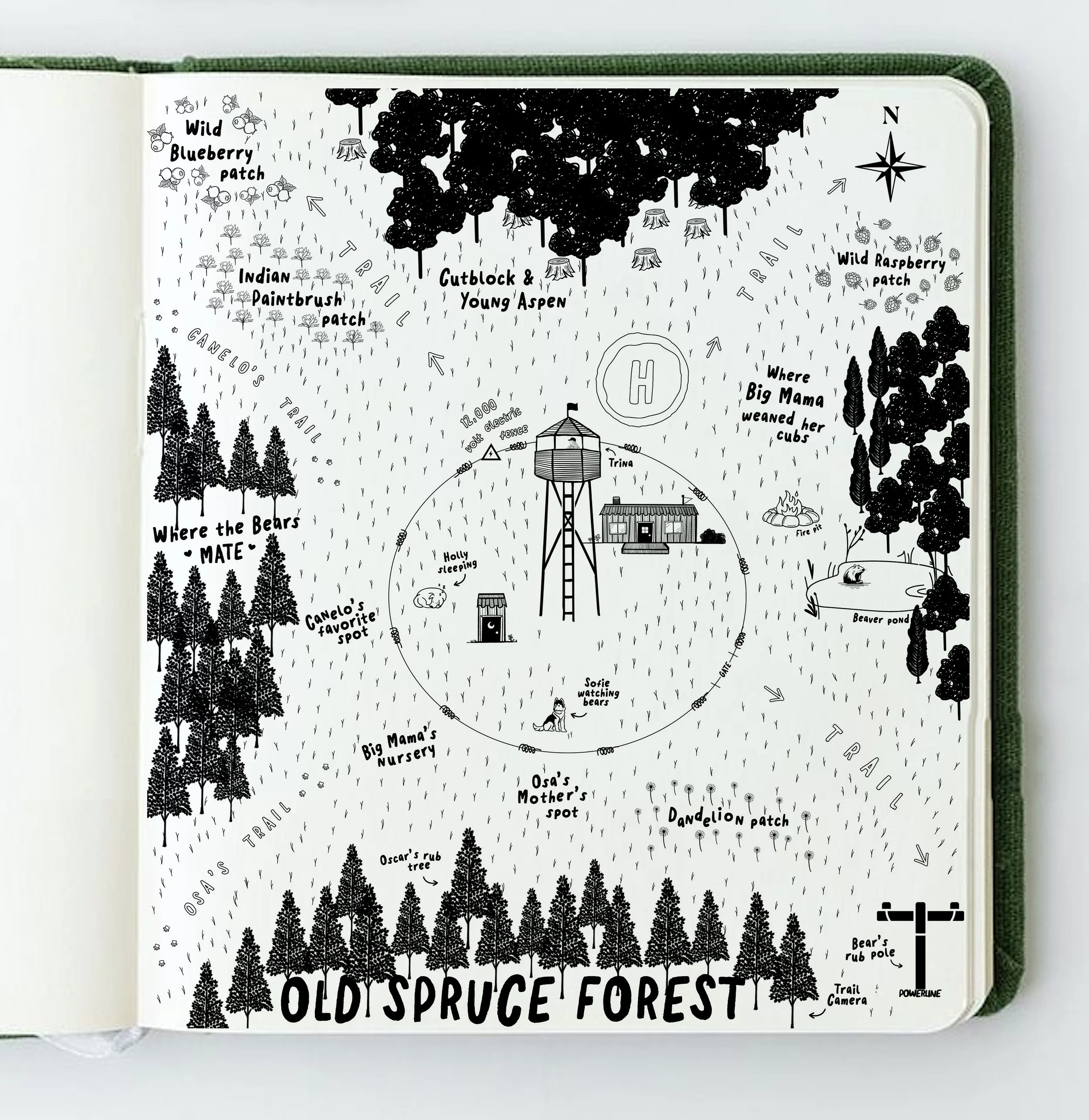
Several months ago, my fabulous website designer, Katie Boyle, encouraged me to visual the land around my fire tower, where I lived closely with the bears, to make a map of our shared experiences. Katie created a beautiful landing page for Black Bear where you can see the individual bears whom I wrote about: Osa, Oscar, Osa’s mother, Canelo, Osito, Big Mama. It’s incredibly special—and I’m so grateful to Katie!
I am thrilled to announce that I’ve got some book launch events planned for January. I would love to see you there, to hear your thoughts about the book, to meet, discuss, and share in the work. Also, I want to hear about the bears in YOUR community—I know they’re there and I’ve got a hunch they have stories of their own.
BLACK BEAR — TOUR DATES
JANUARY 7 - EDMONTON - 7 PM
In Conversation with author, Conor Kerr, hosted by the Edmonton Public Library at the Strathcona Branch, 8331 104 Street. Free admission.
JANUARY 9 - WHITEHORSE - 7 PM
In Conversation with poet, Joanna Lilley, and filmmaker, Allan Code, hosted by the Beringia Centre, located at km 1423 Alaska Highway. Free admission.
JANUARY 15 - CALGARY - 7 PM
In Conversation with author, Kevin Van Tighem, hosted by Word Fest. Memorial Park Library, 2nd Floor. $25 tickets. Reserve online.
JANUARY 29 - OTTAWA - 7 PM
Can Geo Talks, hosted by the Royal Canadian Geographical Society, 50 Sussex Drive. (This is a ticketed event—more info coming soon!)
FEBRUARY 3 - TORONTO - 7PM
In Conversation with author Claire Cameron, hosted by Flying Books, at Neverland location, 371 Queen Street, West. Free admission.
Before I sign off, I’ve gotta admit that I am really not a writer at all these days. I am a full-time snow shoveler, in fact. Winter arrived late in Whitehorse—as it did across much of Canada—and when it snows, it dumps. And when you live in a Mongolian yurt, insulated with sheep’s wool that needs to breathe, you have to shovel off the roof of the yurt. Every. Time. It. Snows.
Even so, BRING ON THE SNOW! When I’m not writing, or shovelling, I’m gliding along on skis, pulled by my husky, Sof. It’s such an exhilarating and beautiful way to travel on the land together.
Thanks for reading, friends—and for your support, as always.
-Trina
Pre-order your copy of Black Bear today, anywhere you get your books.